English
 English
 عربى

Bolt Tensioning Pump Manufacturers
-
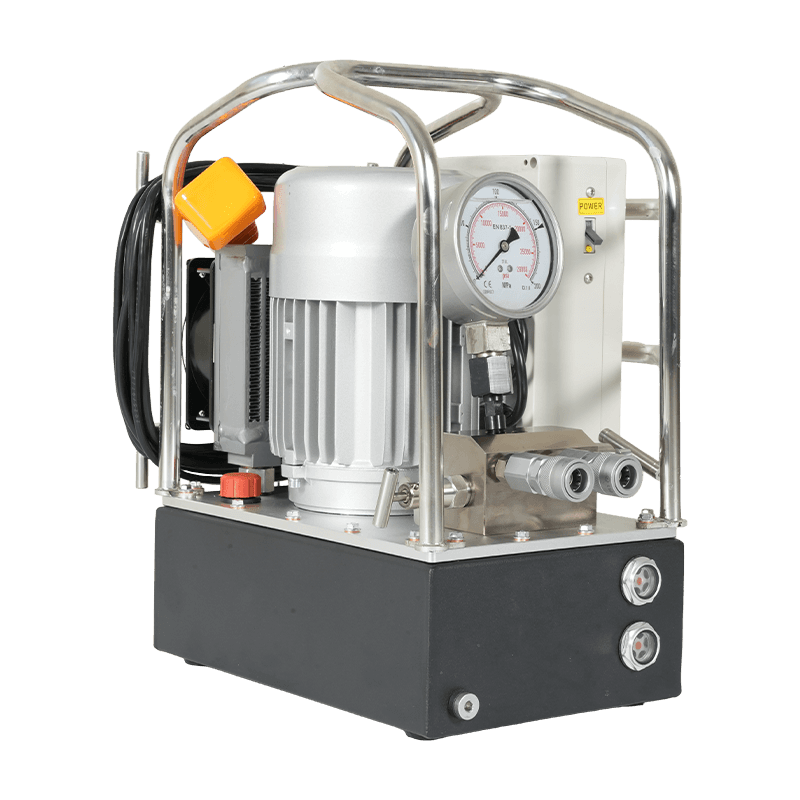
TP Series Brushless Dual-Speed Electric Tensioning Pump
Bolt Tensioning Pump
-
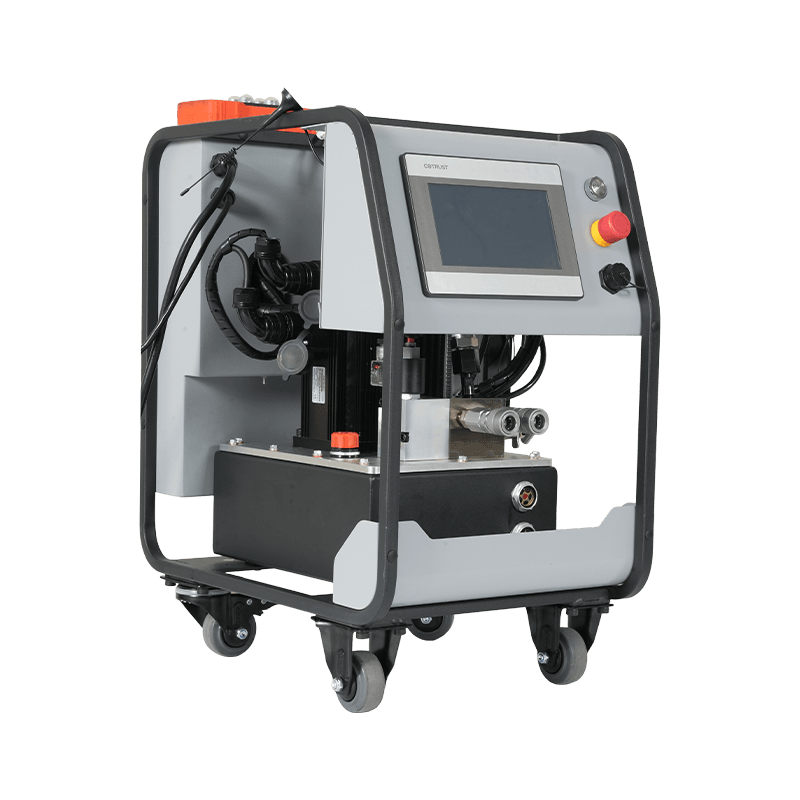
TPI PLC Data-Recording Intelligent Electric Tensioning Pump
Bolt Tensioning Pump
-
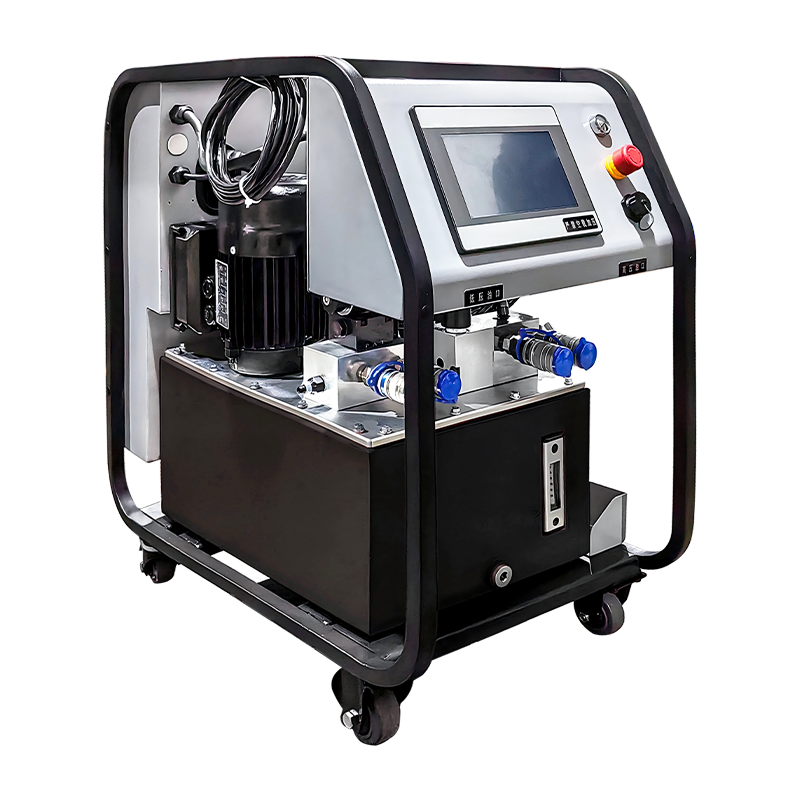
TPI Double-acting Intelligent Tensioning Pump
Bolt Tensioning Pump
-
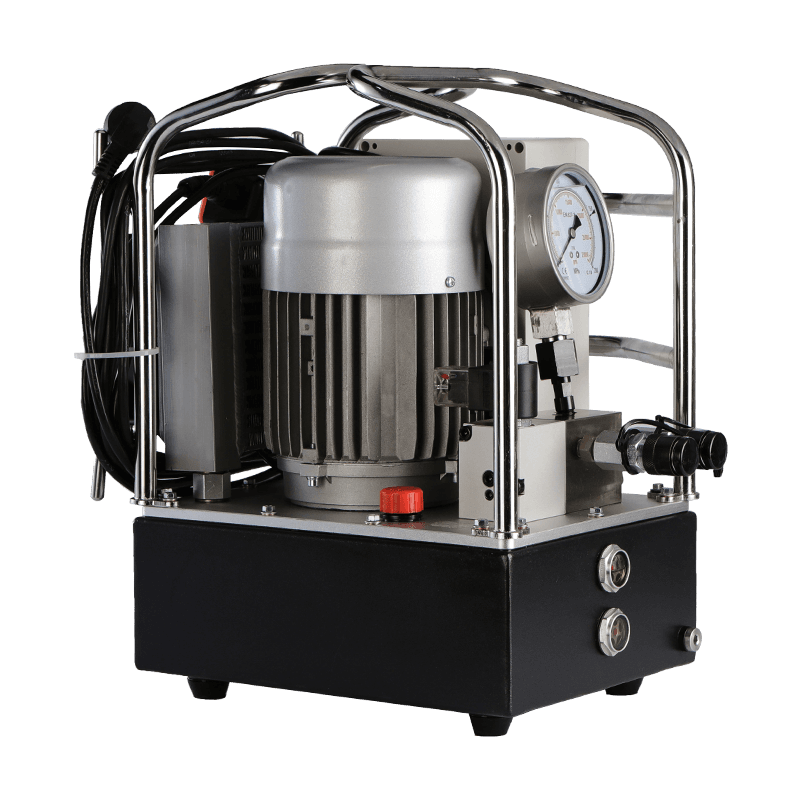
TPD Brushless Remote-Control Electromagnetic Tensioning Pump
Bolt Tensioning Pump
-
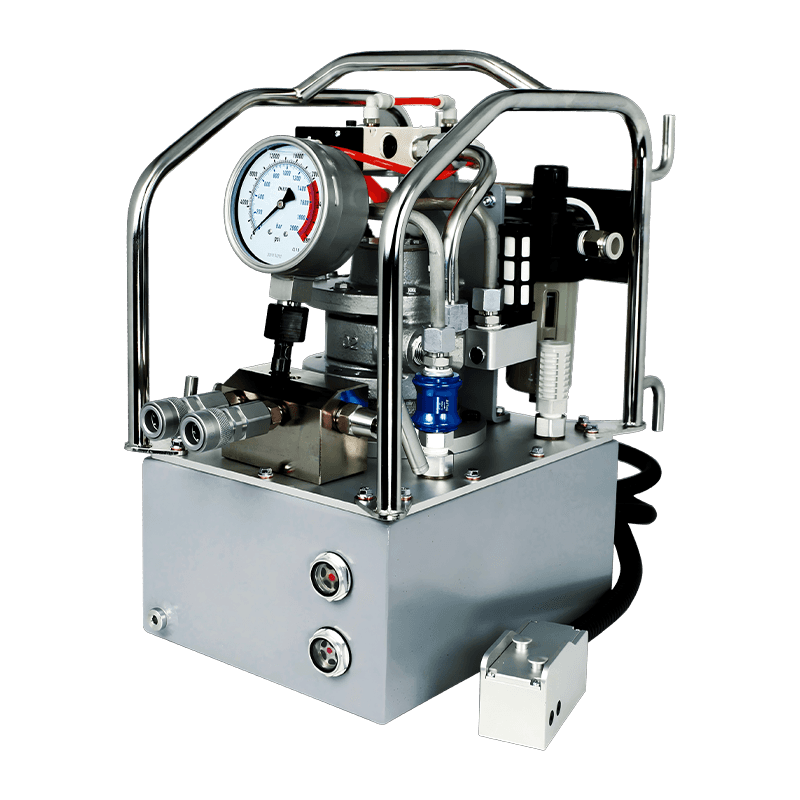
TPR Explosion-Proof Direct-Drive Pneumatic Tensioning Pump
Bolt Tensioning Pump
-
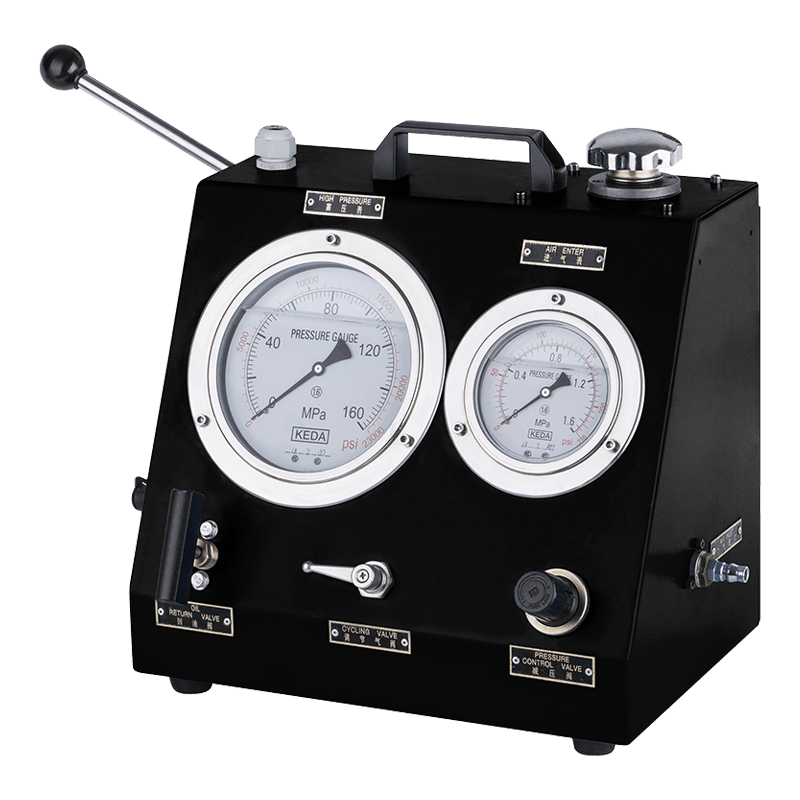
TPS Explosion-Proof Booster Pneumatic Tensioning Pump
Bolt Tensioning Pump
Bolt tensioning pumps serve as dedicated high-pressure power sources for hydraulic bolt tensioners, delivering precise and controlled hydraulic pressure to achieve accurate pre-load on large high-strength bolts. Our range includes brushless electric, electromagnetic, and pneumatic drive options, with output pressure up to 250 MPa and support for simultaneous multi-tensioner operation. Applications span wind turbine tower bolting, pressure vessel and flange assembly, petrochemical pipeline maintenance, power plant boiler and turbine overhaul, and heavy industrial equipment installation.
ABOUT Ruide
Hangzhou Ruide Machinery Co., Ltd.
Hangzhou Ruide Machinery Co., Ltd. is an enterprise with professional strength in the field of ultra-high pressure hydraulic tool machinery. Bolt Tensioning Pump Manufacturers in China. The company is committed to providing customers with high-quality and innovative hydraulic machinery solutions. With years of industry experience and professional knowledge, we have demonstrated outstanding capabilities in hydraulic design, manufacturing, and maintenance. The various hydraulic pumps, hydraulic wrenches, hydraulic tensioners, hydraulic jacks and other tools produced by the company are widely used in different fields such as wind power, petroleum, chemical industry, construction, nuclear power, etc. From standard hydraulic tools to large non-standard equipment, our products are praised by customers for their reliability and high performance. The company has a highly qualified and experienced team, including engineers, technicians, and managers. In addition, the company also provides high-quality after-sales service to ensure continuous customer satisfaction. The company focuses on technological innovation and continuously invests resources in research and development to meet the ever-changing market demands. Custom Bolt Tensioning Pump. Always adhere to strict quality control standards to ensure that every product meets or exceeds customer expectations.
-
2022
Founded in
-
2000+
Factory area
-
30+
Number of Employees
-
1000+
Projects
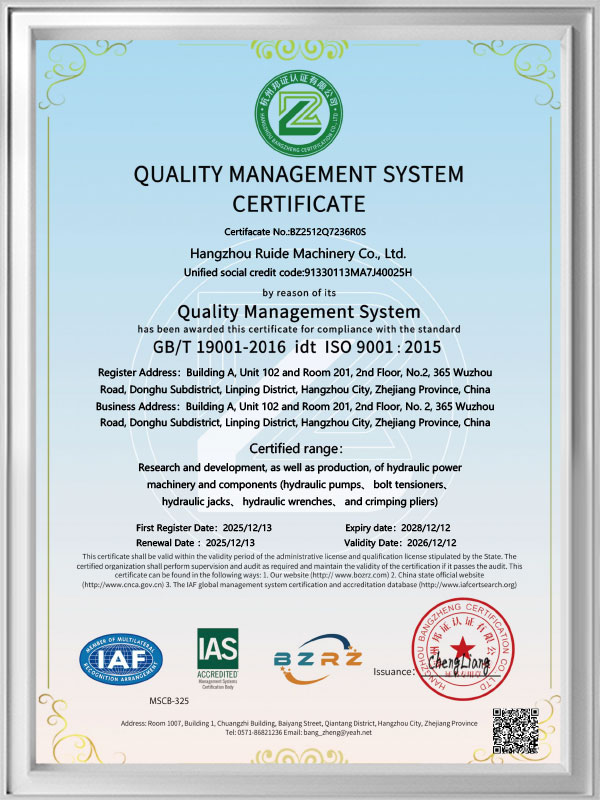
Certificate Of Honor
News
-
A torque wrench pump that rattles like it is full of gravel, a gauge needle that jumps instead of holding steady, or a tensioner that creeps after the pressure is set—these are familiar signs of air in hydraulic fluid. The fluid itself is often not the source. In most recurrent cases, free air is e...
READ MORE -
A pressure dew point that creeps up two or three degrees over eighteen months is rarely a refrigeration fault. In most industrial compressed air dryers, the cabinet, the refrigerant compressor and the controller outlive everything around them. What actually sets the dew point is the condition of th...
READ MORE -
The Core Purpose of a Hydraulic Torque Wrench A hydraulic torque wrench is primarily used for tightening or loosening large, high-strength bolts with extreme precision and force. Unlike manual tools, it utilizes hydraulic pressure to generate torque outputs ranging from 1,000 to over 50,000 foot-po...
READ MORE
Industry Knowledge
Bolt Tensioning Pump Manufacturer for Controlled Bolt Preload
Hangzhou Ruide Machinery Co., Ltd. manufactures ultra-high pressure hydraulic power sources for hydraulic bolt tensioners. As a Bolt Tensioning Pump manufacturer, we build the pump, manifold, valve block and control package as one matched unit, so the tensioner receives a stable pressure ramp instead of a pressure that drifts across a long bolt sequence.
Our range covers brushless electric, PLC-controlled intelligent, electromagnetic and explosion-proof pneumatic drives, with output pressure up to 250 MPa and support for simultaneous operation of multiple tensioners. These pumps are used on wind turbine tower and foundation bolting, pressure vessel and flange assembly, petrochemical pipeline maintenance, power plant boiler and turbine overhaul, and heavy industrial equipment installation.
Our Bolt Tensioning Pump Range
Six drive platforms cover the practical split between workshop cycle speed, documented tensioning, remote operation and hazardous-area work. They share our hydraulic design and manifold practice, so hoses, quick couplers and tensioner interfaces stay consistent across a project even when several platforms are used on the same site.
| Series | Drive and control | Where it fits |
|---|---|---|
| TP Series | Brushless dual-speed electric, pressurized start-up | Wind tower and general flange bolting where cycle time drives the schedule |
| TPI PLC Data-Recording | Intelligent electric with HD digital display and PLC data recording | Power plant, nuclear and pressure vessel work requiring a recorded tensioning trace |
| TPI Double-acting | Dual-action hydraulic cycle with high-pressure extension and active retraction | High bolt counts and repeated cycles where fast, positive piston return matters |
| TPD | Brushless motor with remote control and electromagnetic valve | Elevated, confined or awkward access where the operator works away from the pump |
| TPR | Explosion-proof direct-drive pneumatic, compressed air only | Petrochemical and other areas where electrical sparks are not acceptable |
| TPS | Explosion-proof booster pneumatic | Hazardous zones needing higher pressure from an air-driven booster circuit |
The wider Hydraulic Pump family covers wrench, jack, power-tool and manual duties, so a single site can standardise on one hydraulic platform.
Application Fit Across Wind, Petrochemical, Power and Heavy Industry
Tensioning is chosen over torqueing when the joint must be loaded axially and the residual preload has to be predictable. Our pumps are configured around that requirement rather than around a single pressure figure.
- Wind power: tower flange, foundation and blade bearing bolting, where large bolt counts and repeatable preload dominate.
- Petrochemical: pipeline flanges, heat exchangers and reactor covers, frequently in classified areas served by the TPR and TPS pneumatic platforms.
- Power generation: boiler, turbine casing and steam line joints, where the TPI data-recording platform provides a traceable record.
- Nuclear and pressure vessels: critical flange joints requiring controlled, documented loading sequences.
- Bridge and heavy equipment: structural connections and installation bolting on site, often with remote or multi-point operation.
The pump is matched to the Hydraulic Bolt Tensioner piston area, stroke and the number of bolts to be loaded per shift. Where a project also includes torque-controlled joints, the Hydraulic Wrench Pump range covers that duty on the same hydraulic principle.
Specifications That Define a Tensioning Pump Configuration
Output pressure alone does not describe a tensioning pump. The working point is set by the combination below, and we confirm each item against the tensioner data before releasing a build.
- Maximum output pressure: up to 250 MPa across the range, selected against the tensioner load area and required preload.
- Flow and speed: dual-speed electric platforms give a fast low-pressure approach followed by a controlled high-pressure stage.
- Reservoir and oil volume: sized for the total displaced volume of all tensioners in the circuit plus hose fill.
- Number of outlets: single or multi-point manifolds for simultaneous tensioner operation.
- Valve function: manual, electromagnetic or PLC-sequenced, depending on how the joint sequence is controlled.
- Drive: brushless electric, compressed air direct drive or air-driven booster.
- Instrumentation: analogue gauge, HD digital display or PLC data recording.
- Couplings and hoses: matched to the tensioner port standard and the site's existing tooling.
Controls, Data Recording and Automation Integration
We configure the control layer around the way the joint is actually loaded. On the TPI data-recording platform, pressure is displayed and logged so a tensioning sequence can be reviewed after the joint is closed; on the TPD platform, remote control keeps the operator clear of the loaded flange while the electromagnetic valve handles the pressure cycle.
- Sequence control for grouped or staged tensioning of a flange ring.
- Pressure holding and controlled release to avoid shock loading on the stud.
- Remote pendant or hand-held control for elevated and confined positions.
- Signal and interface points agreed with the project's control contractor where the pump is part of a larger line or skid.
Pneumatic and Explosion-Proof Platforms
Where the working area is classified or compressed air is the only available utility, the TPR direct-drive and TPS booster pneumatic pumps operate entirely on air and produce no electrical sparks. Both are built for petrochemical, refinery and similar environments, and both accept the same tensioner couplings as the electric platforms.
Air quality, supply pressure and flow determine achievable cycle time, so we confirm the site air supply as part of the configuration rather than assuming a workshop compressor.
Quality Control and Acceptance
We apply full-process quality management in our own workshop: inspection follows each production stage, and finished pumps are checked 100% against the agreed specification and international standards before packing. Pressure testing, function testing and leak checks are carried out on the assembled unit, not on components alone.
Acceptance documentation is agreed at order stage. Where a project requires a witnessed test, a pressure-hold record or a tensioning trace, that requirement is written into the build specification so the pump is delivered ready for the site acceptance procedure.
Information We Use to Configure Your Solution
A quotation is only useful if it matches the joint. The table below shows the inputs we work from and what each one determines.
| Project input | What it determines |
|---|---|
| Bolt size, grade and required preload | Working pressure and tensioner load area |
| Tensioner model, piston area and stroke | Oil volume per cycle and reservoir size |
| Number of tensioners used at once | Manifold outlets, hose length and flow requirement |
| Bolts per shift and cycle-time target | Drive type and single- or dual-speed selection |
| Area classification and available utilities | Electric, pneumatic or explosion-proof platform |
| Recording, control and acceptance requirements | Instrumentation, PLC functions and test documentation |
Customized production is our core business. We develop and manufacture from customer drawings or samples, from standard hydraulic tools through to large non-standard equipment, and we confirm the configuration in writing before production starts.
Installation, Maintenance and Delivery Scope
Pumps are supplied with the matched hoses, couplings and manifold arrangement for the agreed tensioner set, together with operating and maintenance documentation. Commissioning support covers pressure setting, sequence verification and operator briefing on the specific platform supplied.
- Hydraulic oil specification, filtration and first-fill guidance.
- Coupling and hose inspection points, and the recommended replacement interval.
- Seal, valve and gauge spares held as serviceable items.
- Packing suited to sea freight, with shipment arranged through Ningbo Port or by air where a project schedule requires it.
Frequently Asked Questions
What output pressure can your tensioning pumps reach?
Our range reaches up to 250 MPa. The actual working pressure is set by the tensioner piston area and the preload required on the stud, and we confirm that figure against your bolt data before the pump is built.
Can one pump operate several tensioners at the same time?
Yes. We supply multi-outlet manifolds for simultaneous tensioner operation, sized so that flow and reservoir volume remain adequate for the whole circuit. Grouped and staged tensioning sequences are configured on the control side.
Which pump should be used in a hazardous area?
The TPR explosion-proof direct-drive pneumatic pump and the TPS explosion-proof booster pneumatic pump run entirely on compressed air and produce no electrical sparks. They are the platforms we specify for petrochemical and similar classified environments.
Do you provide a recorded tensioning trace?
The TPI PLC data-recording intelligent electric tensioning pump combines an HD digital display with PLC data recording, so the pressure history of a tensioning sequence can be reviewed after the joint is closed. This platform is normally selected for power plant, nuclear and pressure vessel work.
Can you manufacture to our own drawings or samples?
Customized production is our core business. We develop and manufacture from customer drawings or samples, covering both standard hydraulic power machinery and large non-standard equipment for complex applications.
What do you need from us to prepare a proposal?
Send the bolt size and grade, required preload, tensioner model and piston area, the number of tensioners used at once, the bolts per shift target, the area classification, available power or air supply, and any recording or acceptance requirement. With those inputs we return a configured pump, manifold and control arrangement with the matching hose and coupling set.
Quick Contact
No. 365 Wuzhou Road, Donghu Street, Linping District, Hangzhou City, Zhejiang Province
Products
Stay In Touch
If you have any questions or need help, feel free to contact with our team.
Copyright © Hangzhou Ruide Machinery Co., Ltd. Rights Reserved.
 Bolt Tensioning Pump Factory in China