English
 English
 عربى

Hydraulic Jack Pump Manufacturers
-
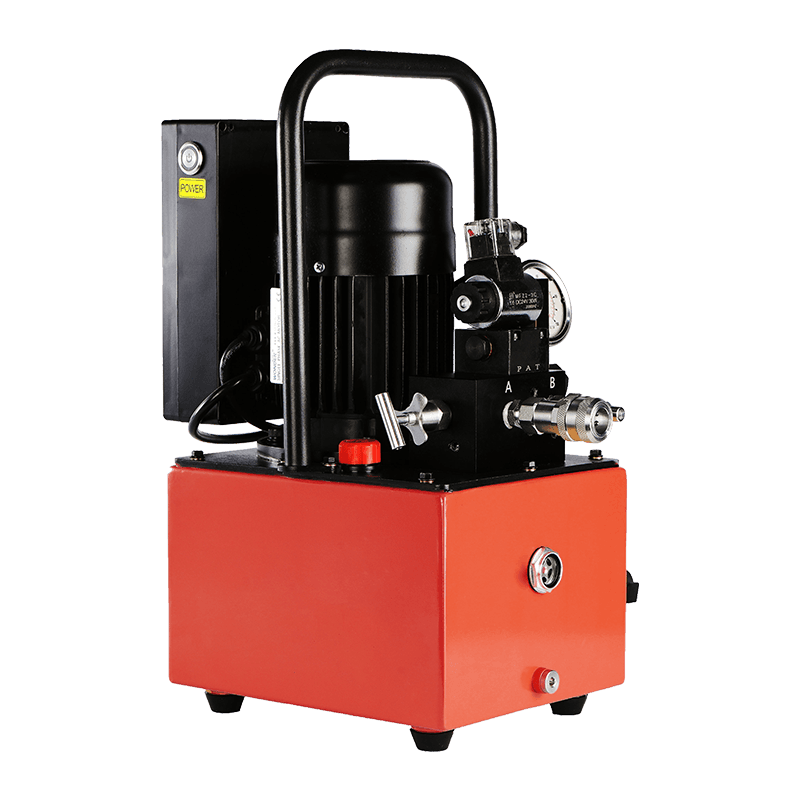
CP3 Dual-Circuit Compact Electric Hydraulic Pump
Hydraulic Jack Pump
-
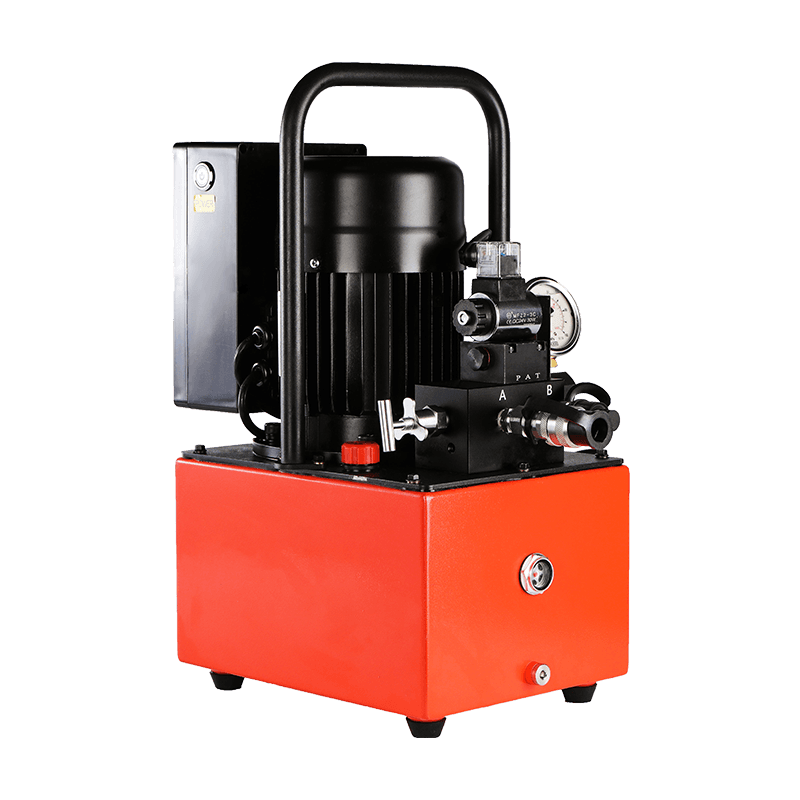
CP6 Enhanced-Flow Dual-Speed Electric Hydraulic Pump
Hydraulic Jack Pump
-
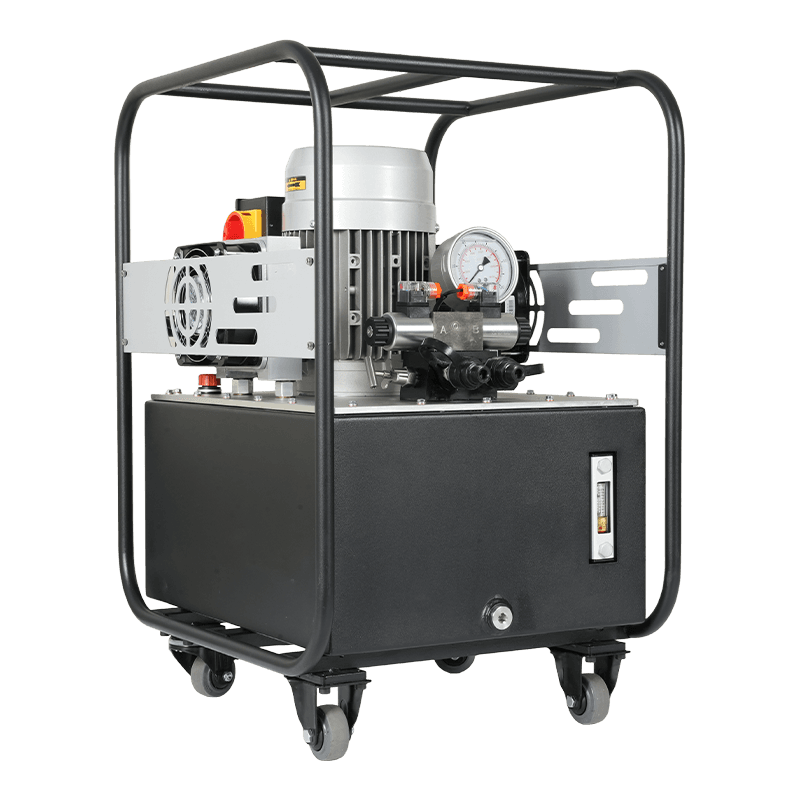
CP8/10/20/35 Heavy-Duty Large-Tank Electric Hydraulic Pump
Hydraulic Jack Pump
Hydraulic jack pumps deliver the controlled pressure and flow needed to power single-acting and double-acting hydraulic cylinders for lifting, pressing, and alignment operations. Featuring dual-circuit architecture, automatic high-low pressure switching, precision pressure gauges, and optional caster-wheel mobility, they accommodate a wide range of cylinder sizes and tonnages. Suitable for bridge and structural lifting, industrial equipment alignment, die installation, heavy load positioning, and on-site maintenance across civil and industrial engineering projects.
ABOUT Ruide
Hangzhou Ruide Machinery Co., Ltd.
Hangzhou Ruide Machinery Co., Ltd. is an enterprise with professional strength in the field of ultra-high pressure hydraulic tool machinery. Hydraulic Jack Pump Manufacturers in China. The company is committed to providing customers with high-quality and innovative hydraulic machinery solutions. With years of industry experience and professional knowledge, we have demonstrated outstanding capabilities in hydraulic design, manufacturing, and maintenance. The various hydraulic pumps, hydraulic wrenches, hydraulic tensioners, hydraulic jacks and other tools produced by the company are widely used in different fields such as wind power, petroleum, chemical industry, construction, nuclear power, etc. From standard hydraulic tools to large non-standard equipment, our products are praised by customers for their reliability and high performance. The company has a highly qualified and experienced team, including engineers, technicians, and managers. In addition, the company also provides high-quality after-sales service to ensure continuous customer satisfaction. The company focuses on technological innovation and continuously invests resources in research and development to meet the ever-changing market demands. Custom Hydraulic Jack Pump. Always adhere to strict quality control standards to ensure that every product meets or exceeds customer expectations.
-
2022
Founded in
-
2000+
Factory area
-
30+
Number of Employees
-
1000+
Projects
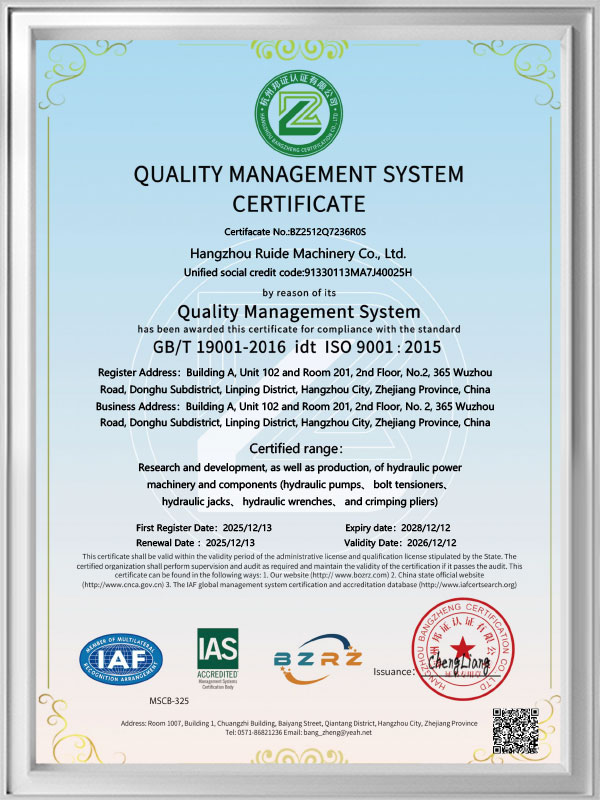
Certificate Of Honor
News
-
A torque wrench pump that rattles like it is full of gravel, a gauge needle that jumps instead of holding steady, or a tensioner that creeps after the pressure is set—these are familiar signs of air in hydraulic fluid. The fluid itself is often not the source. In most recurrent cases, free air is e...
READ MORE -
A pressure dew point that creeps up two or three degrees over eighteen months is rarely a refrigeration fault. In most industrial compressed air dryers, the cabinet, the refrigerant compressor and the controller outlive everything around them. What actually sets the dew point is the condition of th...
READ MORE -
The Core Purpose of a Hydraulic Torque Wrench A hydraulic torque wrench is primarily used for tightening or loosening large, high-strength bolts with extreme precision and force. Unlike manual tools, it utilizes hydraulic pressure to generate torque outputs ranging from 1,000 to over 50,000 foot-po...
READ MORE
Industry Knowledge
Hangzhou Ruide Machinery Co., Ltd. builds hydraulic jack pumps for the controlled lifting, pressing and alignment work behind bridge erection, plant installation, die handling and heavy on-site maintenance. Our range runs from compact dual-circuit electric pumps to heavy-duty large-tank units, sized around single-acting and double-acting cylinders across a wide span of tonnages.
As a Hydraulic Jack Pump manufacturer in China, we keep hydraulic design, manufacturing and maintenance in-house, and we produce both standard units and non-standard equipment developed from customer drawings or samples.
What Our Hydraulic Jack Pumps Deliver
A jack pump is the power source for the cylinder doing the work. It has to hold a set pressure without drift, move the load at a usable rate, and stay stable through a long shift on a site where the pump may sit on a deck, a girder or a temporary platform.
- Dual-circuit architecture for driving two cylinders or two functions from one power unit.
- Automatic high-low pressure switching so the approach stroke is fast and the working stroke is controlled.
- Precision pressure gauges for reading and holding the working point.
- Optional caster-wheel mobility for pumps that move between lifting positions.
- Cylinder compatibility across a wide range of sizes and tonnages, single-acting or double-acting.
Our Hydraulic Jack Pump Range
Three electric families cover most lifting and pressing duties, with custom builds where the standard envelope does not fit. The wider hydraulic pump range includes tensioning, wrench and manual variants for other bolting and tool circuits.
| Model | Circuit and drive | Application fit | Configuration notes |
|---|---|---|---|
| CP3 Dual-Circuit Compact Electric Hydraulic Pump | Dual-circuit electric, compact frame | Tight-access lifting, equipment alignment and maintenance where the pump must sit close to the load | Precision gauge, dual outlets, optional caster-wheel mobility |
| CP6 Enhanced-Flow Dual-Speed Electric Hydraulic Pump | Dual-speed electric with enhanced flow | Faster approach strokes on larger cylinders, repeated lifting and pressing cycles | Automatic high-low pressure switching, gauge, matched to cylinder tonnage |
| CP8/10/20/35 Heavy-Duty Large-Tank Electric Hydraulic Pump | Heavy-duty electric, large reservoir | Sustained duty, multi-cylinder manifolds, long on-site shifts | Larger oil volume for thermal stability, multi-outlet options, caster mobility |
| Custom builds | To specification | Non-standard pressure, flow, control interface or mounting arrangement | Developed from customer drawings or samples |
Matching Pump Output to Cylinder Tonnage and Duty Cycle
Flow sets the speed, pressure sets the force, and reservoir volume sets how long the unit can work before the oil temperature becomes the limiting factor. We size the pump around the working point rather than the cylinder catalogue number alone.
- Force requirement — effective cylinder area at the working pressure, with margin for friction and load shift.
- Stroke and cycle time — how fast the load must travel, and whether the approach stroke can run at high flow.
- Duty cycle — continuous pressing, intermittent lifting, or a sequence of short strokes across a shift.
- Circuit count — one cylinder, two cylinders in parallel, or two independent functions.
- Hold time — whether the load stays pressurised for minutes or hours, which affects valve and seal selection.
Dual-Circuit Architecture and Pressure Control
Dual-circuit pumps let one power unit serve two cylinders or a lift-and-hold pair without a separate pump for each position. Automatic high-low pressure switching keeps the approach stroke quick and then drops to the high-pressure stage for the working stroke, which reduces heat build-up and operator waiting time.
Pressure is read on a precision gauge and set through the relief and control arrangement agreed for the project. Where a lift must be repeated to the same point, we confirm the setting method and the gauge scale with the customer so the reading on site matches the calculation in the office.
Configuration, Controls and Line Integration
We configure the control arrangement around the required line interface — pendant or panel control, gauge position, outlet count and coupler type. Pumps that travel with the work are usually specified with caster-wheel mobility and a hose length that reaches the furthest cylinder without dragging.
- Outlet quantity and manifold layout for one or two circuits.
- Couplers matched to the customer's existing cylinder and hose stock.
- Motor and control configuration for the available supply voltage, phase and frequency.
- Mobility: fixed frame, caster wheels or lifting points.
- Where a project needs logged pressure data or a machine-level interface, we review it as a customized build rather than forcing a standard unit into the role.
Build Quality and Inspection
We apply full-process quality management: inspection follows each production step, and finished units are checked 100% against customer requirements and the applicable international standards before packing. Hydraulic blocks, valves, gauges and reservoirs are assembled and tested as a system, not as loose components.
Our engineering team includes more than ten engineers and seven technicians, which is what allows us to take a drawing, a sample or a described duty and return a workable pump configuration rather than a catalogue match.
Installation, Commissioning and Acceptance
Commissioning a jack pump is mostly about clean oil, correct pressure setting and a leak-free circuit. The checks below are the ones we walk through with the installation team.
- Confirm supply voltage, phase and frequency against the motor nameplate.
- Fill with the specified hydraulic oil grade and check the level at the reservoir sight.
- Purge air from hoses and cylinders before applying working pressure.
- Set the relief to the project pressure and verify against the gauge.
- Run a full stroke on each circuit and inspect every joint for weeping.
- Record the acceptance result against the agreed test list.
Maintenance, Spare Parts and Serviceability
Routine attention is limited to oil condition, filter and strainer cleaning, gauge verification, and inspection of hoses, couplers and seals. We supply replacement seal kits, gauges, couplers and hose assemblies so a unit can be returned to service without replacing the whole pump.
For lifting work, the pump is one half of the system — the hydraulic jacks and cylinders on the load side determine the pressure and flow the pump must hold. We review both sides together when a project combines them.
Information We Use to Configure Your Solution
A quotation is only useful if it matches the working point. These are the inputs that let us select a model or define a custom build.
| Project input | Why we need it | What it determines |
|---|---|---|
| Cylinder type and tonnage | Defines the load side of the circuit | Circuit count, valve function, coupler type |
| Working pressure and required flow | Sets the hydraulic working point | Pump stage, motor rating, relief setting |
| Stroke, cycle time and hold time | Defines speed and stability needs | Flow rate, reservoir volume, valve choice |
| Duty cycle and shift length | Governs thermal margin | Tank size, oil grade, cooling allowance |
| Supply voltage, phase and frequency | Matches site power | Motor and control configuration |
| Control and interface requirement | Defines how the operator commands the pump | Pendant, panel, gauge position, remote options |
| Environment and mobility | Site conditions and handling method | Enclosure, frame, caster wheels, oil selection |
| Hose lengths and manifold layout | Reach between pump and cylinders | Outlet count, hose and coupler supply |
| Documentation, marking and acceptance list | Defines what must be proven at handover | Test records, nameplates, packing scope |
Delivery scope. Pumps are packed for sea freight from Ningbo Port, about 35 km from our works; air freight through Ningbo or Shanghai airports is arranged when a project schedule requires it. Batch production normally runs on a 30% advance with the balance against a copy of the bill of lading, confirmed at quotation.
Frequently Asked Questions
Which pump suits a single-acting versus a double-acting cylinder?
A single-acting cylinder needs pressure on the extend side and a return path; a double-acting cylinder needs controlled pressure on both sides. We confirm the cylinder function first, then set the valve and circuit arrangement so the pump matches the cylinder rather than the other way round.
How do you size flow for a lifting or pressing cycle?
We work from cylinder area, stroke and the time allowed for the stroke. The approach stroke can usually run at high flow, while the working stroke needs controlled flow at pressure — that is exactly what the dual-speed, high-low switching arrangement on the CP6 is built for.
Can you build a jack pump to our own pressure, flow or control specification?
Yes. Customized production is our core business, and we develop and manufacture from the drawings or samples you provide. Non-standard pressures, outlet layouts, mounting arrangements and control interfaces are handled as engineered builds, including the CP8/10/20/35 heavy-duty large-tank electric hydraulic pump family where sustained duty and larger oil volume are required.
What do you need from us to prepare a configuration and quotation?
Cylinder type and tonnage, working pressure, required flow or cycle time, duty cycle, supply voltage, control preference, hose reach and any documentation or acceptance requirements. Drawings or a sample of an existing unit shorten the process considerably. Inquiries received on weekdays are answered within 12 hours.
How is each pump inspected before it leaves your works?
Inspection follows every production step, and the finished unit is checked 100% against customer requirements and the applicable international standards. Pressure setting, circuit function and joint tightness are verified as part of the final test before packing.
What spare parts and support are available after delivery?
We supply seal kits, gauges, couplers and hose assemblies for the pumps we build, and our team supports selection, commissioning questions and maintenance planning through the working life of the equipment. Accessories and tooling are listed separately in our accessories and tools range.
Quick Contact
No. 365 Wuzhou Road, Donghu Street, Linping District, Hangzhou City, Zhejiang Province
Products
Stay In Touch
If you have any questions or need help, feel free to contact with our team.
Copyright © Hangzhou Ruide Machinery Co., Ltd. Rights Reserved.
 Hydraulic Jack Pump Factory in China