English
 English
 عربى

Hydraulic Wrench Pump Manufacturers
-
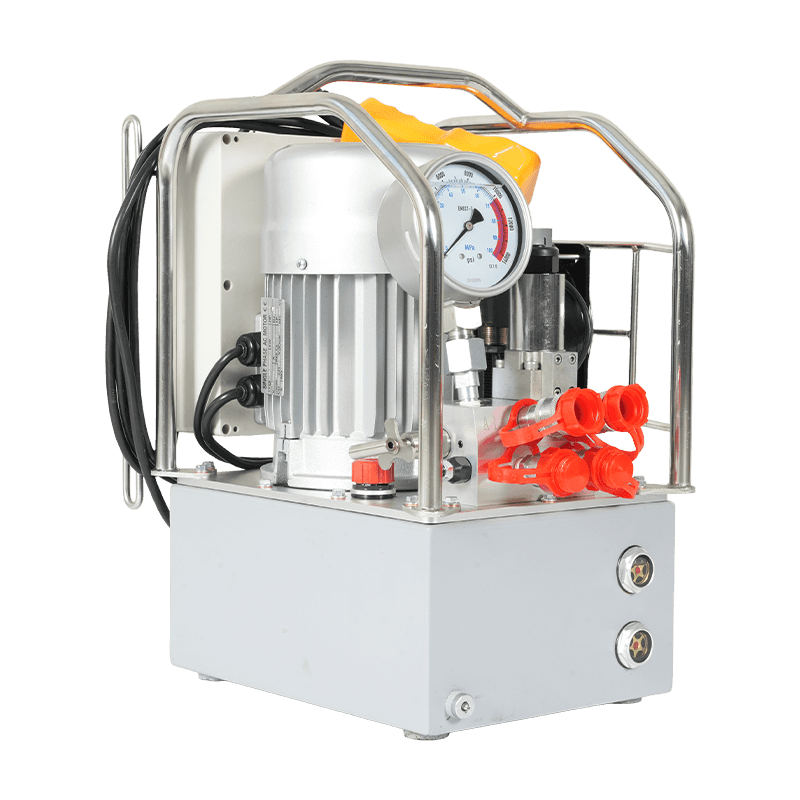
WPT Brushless Three-Stage Electric Wrench Pump
Hydraulic Wrench Pump
-
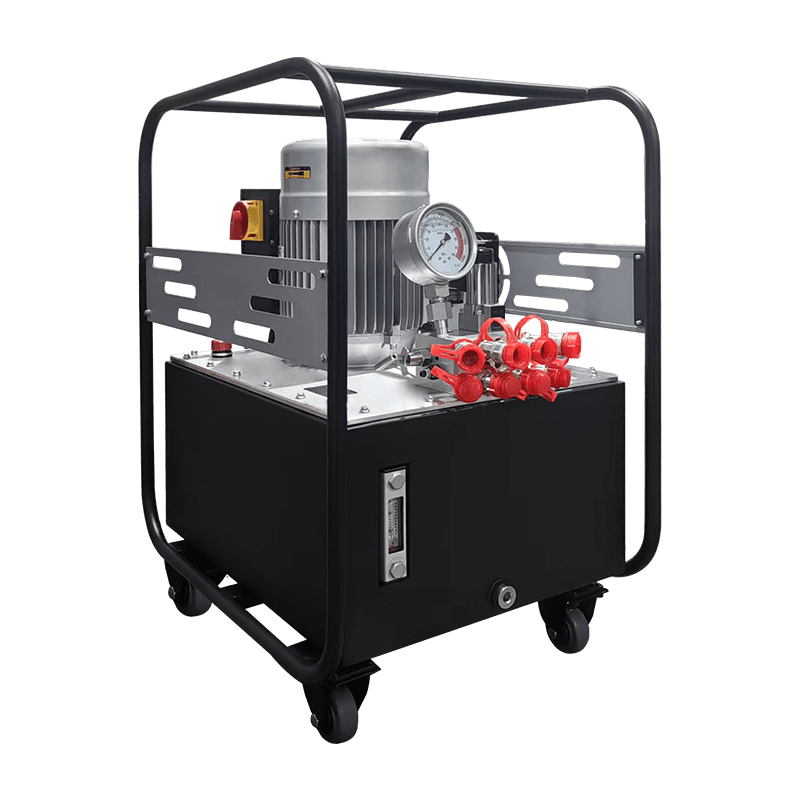
WP High-flow Special Hydraulic Wrench Pump
Hydraulic Wrench Pump
-
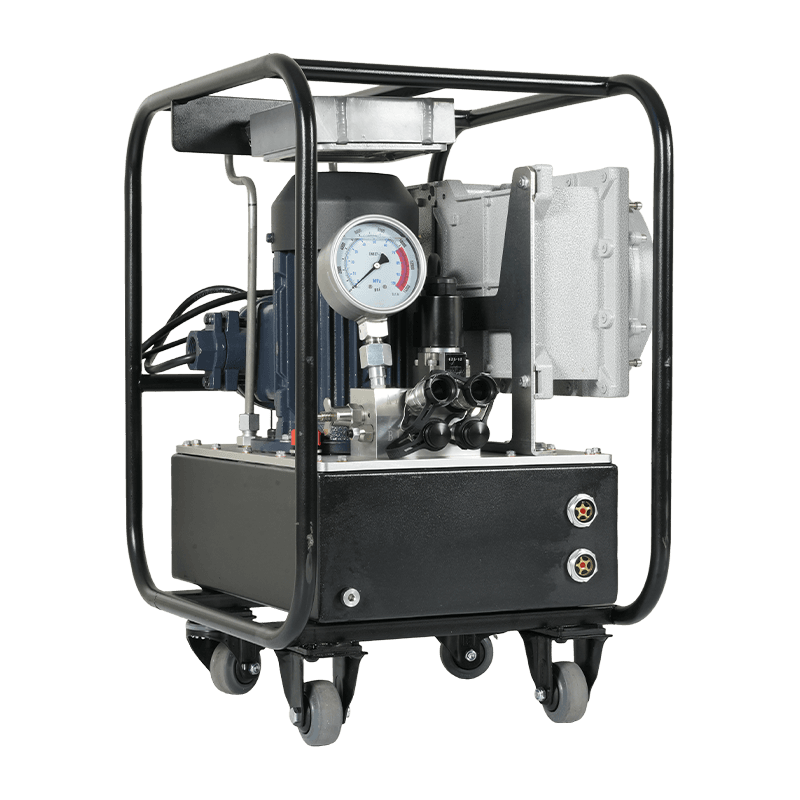
WPB Explosion-proof Electric Wrench Pump
Hydraulic Wrench Pump
-
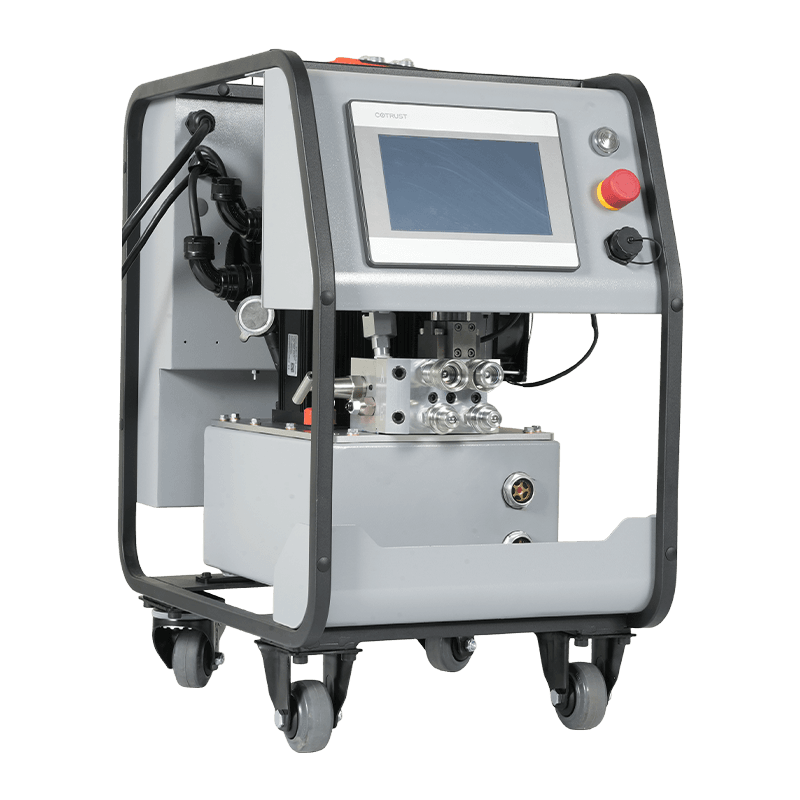
WPI Intelligent Electric Wrench Pump
Hydraulic Wrench Pump
-
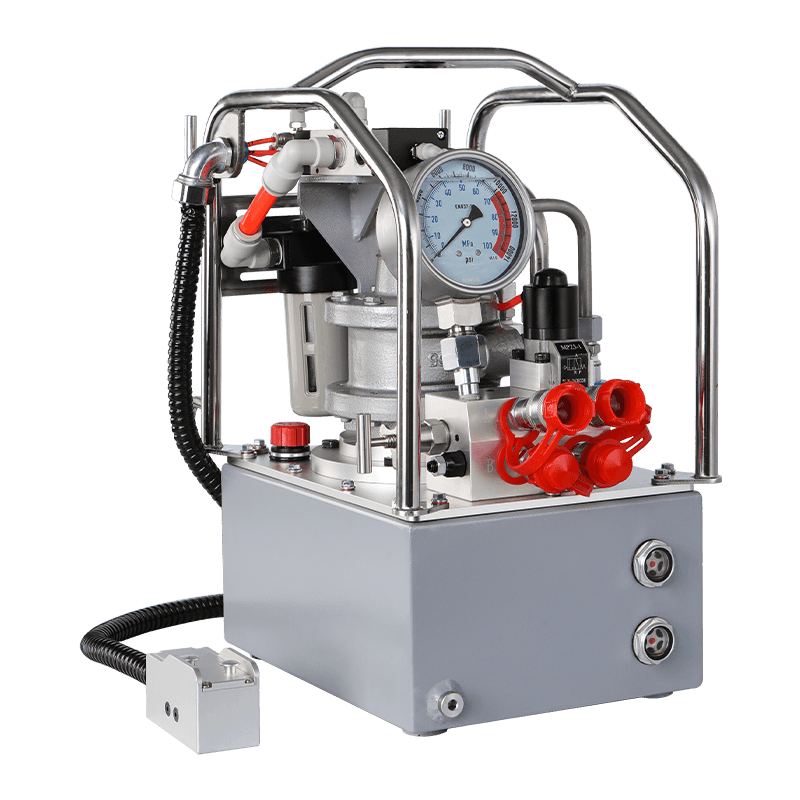
WPR Pneumatic Wrench Pump
Hydraulic Wrench Pump
-
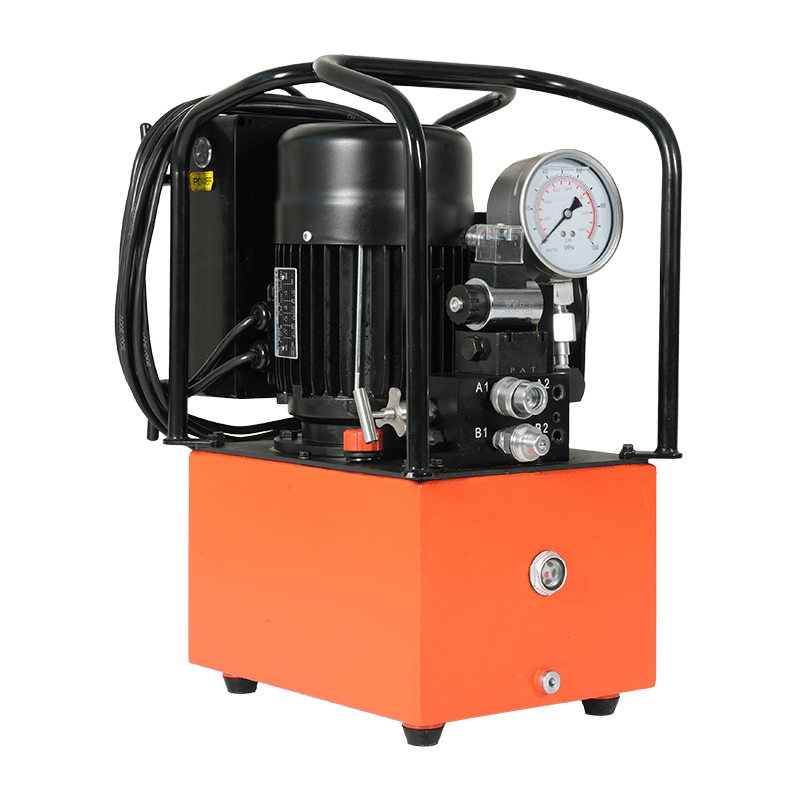
WP Economical Electric Wrench Pump
Hydraulic Wrench Pump
Hydraulic wrench pumps provide the stable, high-pressure hydraulic supply required to drive hydraulic torque wrenches for large bolt tightening and loosening. Our range features three-stage automatic flow switching, brushless motor technology, intelligent control options, and explosion-proof configurations, with single-unit or multi-wrench simultaneous operation modes available. Designed for wind power operations, oil and gas flange joints, pressure vessel maintenance, power tower assembly, mining machinery overhaul, and shipyard installations requiring consistent, repeatable torque output.
ABOUT Ruide
Hangzhou Ruide Machinery Co., Ltd.
Hangzhou Ruide Machinery Co., Ltd. is an enterprise with professional strength in the field of ultra-high pressure hydraulic tool machinery. Hydraulic Wrench Pump Manufacturers in China. The company is committed to providing customers with high-quality and innovative hydraulic machinery solutions. With years of industry experience and professional knowledge, we have demonstrated outstanding capabilities in hydraulic design, manufacturing, and maintenance. The various hydraulic pumps, hydraulic wrenches, hydraulic tensioners, hydraulic jacks and other tools produced by the company are widely used in different fields such as wind power, petroleum, chemical industry, construction, nuclear power, etc. From standard hydraulic tools to large non-standard equipment, our products are praised by customers for their reliability and high performance. The company has a highly qualified and experienced team, including engineers, technicians, and managers. In addition, the company also provides high-quality after-sales service to ensure continuous customer satisfaction. The company focuses on technological innovation and continuously invests resources in research and development to meet the ever-changing market demands. Custom Hydraulic Wrench Pump. Always adhere to strict quality control standards to ensure that every product meets or exceeds customer expectations.
-
2022
Founded in
-
2000+
Factory area
-
30+
Number of Employees
-
1000+
Projects
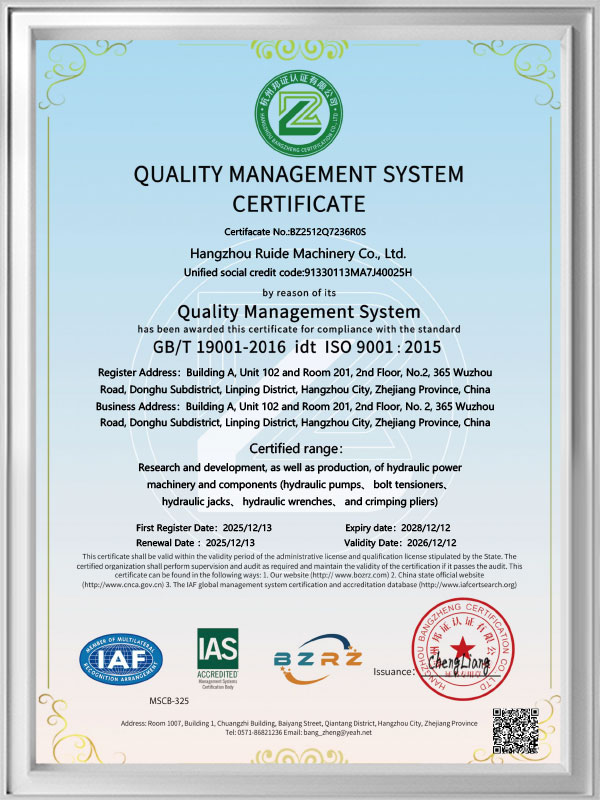
Certificate Of Honor
News
-
A torque wrench pump that rattles like it is full of gravel, a gauge needle that jumps instead of holding steady, or a tensioner that creeps after the pressure is set—these are familiar signs of air in hydraulic fluid. The fluid itself is often not the source. In most recurrent cases, free air is e...
READ MORE -
A pressure dew point that creeps up two or three degrees over eighteen months is rarely a refrigeration fault. In most industrial compressed air dryers, the cabinet, the refrigerant compressor and the controller outlive everything around them. What actually sets the dew point is the condition of th...
READ MORE -
The Core Purpose of a Hydraulic Torque Wrench A hydraulic torque wrench is primarily used for tightening or loosening large, high-strength bolts with extreme precision and force. Unlike manual tools, it utilizes hydraulic pressure to generate torque outputs ranging from 1,000 to over 50,000 foot-po...
READ MORE
Industry Knowledge
Hydraulic Wrench Pump Manufacturer for Ultra-High Pressure Bolting
Hangzhou Ruide Machinery Co., Ltd. designs and manufactures ultra-high pressure hydraulic tool machinery, and our Hydraulic Wrench Pump manufacturer range supplies the stable high-pressure oil flow that drives hydraulic torque wrenches on large bolted joints. Every unit in the family is built around the same duty: hold pressure without drift, switch flow stages automatically, and repeat the same tightening cycle joint after joint.
The range covers brushless three-stage electric, high-flow, explosion-proof, intelligent, pneumatic and economical electric configurations, with single-unit or multi-wrench simultaneous operation modes. These pumps are used in wind power, oil and gas flange work, pressure vessel maintenance, power tower assembly, mining machinery overhaul and shipyard installation.
Our Hydraulic Wrench Pump Range
Six configurations cover the usual spread of site conditions, from a standard workshop tightening task to a classified petrochemical area. Each one is part of our broader Hydraulic Pump programme and is matched to the wrench it will drive.
| Model | Drive | Flow and pressure behaviour | Control | Typical fit |
|---|---|---|---|---|
| WPT Brushless Three-Stage Electric | Brushless electric motor | Three-stage automatic flow switching for fast approach and high-pressure hold | Electric control, single or multi-wrench | Site and workshop bolting where cycle time and motor life matter |
| WP High-flow Special | Electric | High flow output for long hose runs and larger wrench circuits | Electric control with manifold options | Large flanges, long hose distances, several wrenches on one circuit |
| WPB Explosion-proof Electric | Explosion-proof electric motor | Three-stage automatic flow switching in a hazardous-area build | Explosion-proof enclosure and control | Petrochemical, refinery, offshore and other classified areas |
| WPI Intelligent Electric | Electric with intelligent control | Automatic flow switching with a monitored tightening sequence | Intelligent control platform with parameter setting | Procedures that call for controlled, monitored operation rather than a simple start-stop cycle |
| WPR Pneumatic | Compressed air | Air-driven high-pressure supply with no electrical spark source | Pneumatic control | Sites where electrical use is restricted or air is the preferred utility |
| WP Economical Electric | Electric | High-pressure supply in a cost-focused build | Standard electric control | Routine maintenance and standard bolting tasks |
Application Fit Across Bolting-Intensive Industries
The pump is only half of the bolting system; the other half is the wrench, the hose set and the joint itself. We match the pump to the working point rather than to a catalogue headline.
- Wind power: tower flange, nacelle and blade connections, where the pump is carried between joints and cycle time drives the shift plan.
- Oil, gas and petrochemical: pipeline flanges, valves and heat exchangers, with explosion-proof configuration where the area is classified.
- Pressure vessels and chemical plant: shell, head and nozzle flange bolts during shutdown and turnaround work.
- Power transmission and substations: structural and equipment bolting on towers and gantries.
- Mining and heavy machinery: crusher, mill, shovel and dragline overhaul, often in dusty or remote conditions.
- Shipyards and offshore structures: hull, deck and module connections where hose length and portability decide the layout.
Critical Specifications That Shape a Configuration
These are the variables we work through with the project team before a wrench pump is built or selected from the range.
- Working pressure class and the pressure-to-torque relationship of the wrench being driven.
- Low-pressure stage flow, which sets approach speed, and high-pressure stage flow, which sets tightening speed.
- Reservoir capacity against wrench cylinder volume and the number of wrenches on the circuit.
- Motor type: brushless electric, standard electric, explosion-proof electric or pneumatic.
- Valve and control arrangement: manual, solenoid, remote pendant or PLC interface.
- Hose length, internal diameter and coupling standard, since pressure drop over long runs changes the working point.
- Utility supply: voltage, phase, frequency, and air pressure and consumption for pneumatic units.
- Ambient conditions: temperature range, dust, humidity and hazardous area classification.
- Transport format: skid, frame, wheeled trolley or lifting points for crane handling.
Controls, Automation Integration and Multi-Wrench Operation
Control architecture is decided by how the bolting procedure is written. A single-wrench maintenance task needs a pendant and a pressure gauge; a flange with dozens of bolts and a defined tightening sequence needs a different arrangement.
- Solenoid valve banks with pendant or panel control for repeatable advance, hold and retract cycles.
- Manifold distribution so one pump can feed several wrenches, either sequentially or simultaneously.
- Signal interfaces for line-side control where the pump is part of a larger bolting station.
- The WPI Intelligent Electric Wrench Pump for procedures that require monitored, parameter-set operation.
- Explosion-proof electrical components on the WPB for classified zones, and air-only operation on the WPR.
Accuracy and Repeatable Torque Output
Torque accuracy in hydraulic bolting comes from pressure stability, not from the pump alone. A wrench pump that holds pressure cleanly and releases it consistently lets the wrench convert pressure into torque along its calibrated curve, bolt after bolt.
We therefore look at pressure holding behaviour, internal leakage, valve response and gauge quality together with the wrench calibration. Where a project requires verification, the joint is checked with a torque transducer or by the method agreed in the bolting procedure.
Tooling, Hoses and Auxiliary Equipment
A wrench pump is delivered as a working set, not as a bare unit. Hoses, couplings, gauges, manifolds and spare seals are specified with the pump so the circuit is complete on arrival.
- High-pressure hose assemblies sized to the flow and pressure of the selected pump.
- Quick couplings and adaptors matched to the wrench inlet standard.
- Pressure gauges, manifolds and valve blocks for multi-wrench layouts.
- Sockets, hex bits and reaction accessories from our Accessories & Tools range.
Quality Control and Acceptance Testing
We apply full-process quality management: each manufacturing stage is inspected, and finished pumps pass a 100% final inspection against the agreed requirements and international standards. Pressure holding, function cycling and leak checks are part of that final stage.
- Incoming inspection of motors, valves, reservoirs and machined hydraulic components.
- Assembly inspection of seals, fittings and torque-critical joints.
- Function test of flow stage switching, pressure build-up and release.
- Final inspection record prepared with the shipment, alongside the operation and maintenance manual.
Information We Use to Configure Your Solution
A quotation is only useful if it fits the joint. The table below shows the inputs that let us fix the model, the control arrangement and the delivery scope.
| Project input | Why we need it | What it determines |
|---|---|---|
| Wrench model, torque target and bolt size | Sets the pressure and flow working point | Pump model, pressure class and gauge range |
| Number of wrenches and operating mode | Defines total flow demand and reservoir size | Manifold, valve bank and simultaneous or sequential operation |
| Hose length and routing | Pressure drop rises with distance and fittings | Hose bore, coupling type and high-flow configuration |
| Power supply or air supply available | Determines the drive that can be used on site | Motor voltage, phase, frequency or pneumatic specification |
| Area classification and ambient conditions | Governs electrical safety and material selection | WPB explosion-proof or WPR pneumatic configuration |
| Duty cycle and shift pattern | Continuous use affects motor and oil temperature | Motor selection, cooling and reservoir capacity |
| Documentation, acceptance and delivery scope | Defines what must be proven before handover | Test records, manuals, packing and shipping arrangement |
Installation, Commissioning and Maintenance
Commissioning is straightforward when the circuit is clean. We supply the pump with the hydraulic oil grade, filtration and priming requirements stated in the manual, and the hose set is flushed and capped before dispatch.
- Fill and prime with the specified hydraulic oil; bleed air from the circuit before the first tightening cycle.
- Keep couplings clean and capped when disconnected; contamination is the most common cause of valve faults.
- Check oil level, filter condition and hose sheathing at the intervals given in the maintenance schedule.
- Seal kits, valves, gauges and hose assemblies are available as spare parts to keep units in service.
- Custom builds based on drawings or samples are part of our normal production, including large non-standard equipment.
Frequently Asked Questions
What is the difference between the WPT, WPI and WP Economical electric wrench pumps?
The WPT uses a brushless motor with three-stage automatic flow switching for fast approach and stable high-pressure holding. The WPI adds an intelligent control configuration for procedures that need monitored, parameter-set operation. The WP Economical is the cost-focused electric build for routine bolting and maintenance work.
Can one pump drive several hydraulic torque wrenches at the same time?
Yes. Our range supports single-unit and multi-wrench simultaneous operation modes. The number of wrenches, the manifold arrangement and the hose lengths are fixed together, because each additional wrench adds flow demand and each additional metre of hose adds pressure drop.
Which configuration is used in hazardous areas?
The WPB Explosion-proof Electric Wrench Pump is built for classified zones, and the WPR Pneumatic Wrench Pump runs entirely on compressed air with no electrical spark source. The choice between them depends on the zone classification and whether a reliable air supply is available.
How is a wrench pump matched to a hydraulic torque wrench?
We work from the wrench model, its pressure-to-torque curve and the torque target for the joint. That gives the working pressure and the flow needed to reach it in an acceptable cycle time, which in turn fixes the pump model, the valve arrangement and the hose bore.
What information do you need to prepare a quotation?
Wrench model and torque target, bolt size and grade, number of wrenches and operating mode, hose length, available power or air supply, area classification, duty cycle, and the documentation and acceptance requirements for the project. Drawings or samples are enough for custom builds.
Do you supply the wrench and the pump together?
We manufacture hydraulic pumps, bolt tensioners, hydraulic jacks and hydraulic wrenches, so a bolting package can be configured as one system. Our Hydraulic Torque Wrench range is specified alongside the pump when the joint requires a complete solution.
Quick Contact
No. 365 Wuzhou Road, Donghu Street, Linping District, Hangzhou City, Zhejiang Province
Products
Stay In Touch
If you have any questions or need help, feel free to contact with our team.
Copyright © Hangzhou Ruide Machinery Co., Ltd. Rights Reserved.
 Hydraulic Wrench Pump Factory in China