English
 English
 عربى

Power Tool Special Hydraulic Pump Manufacturers
-
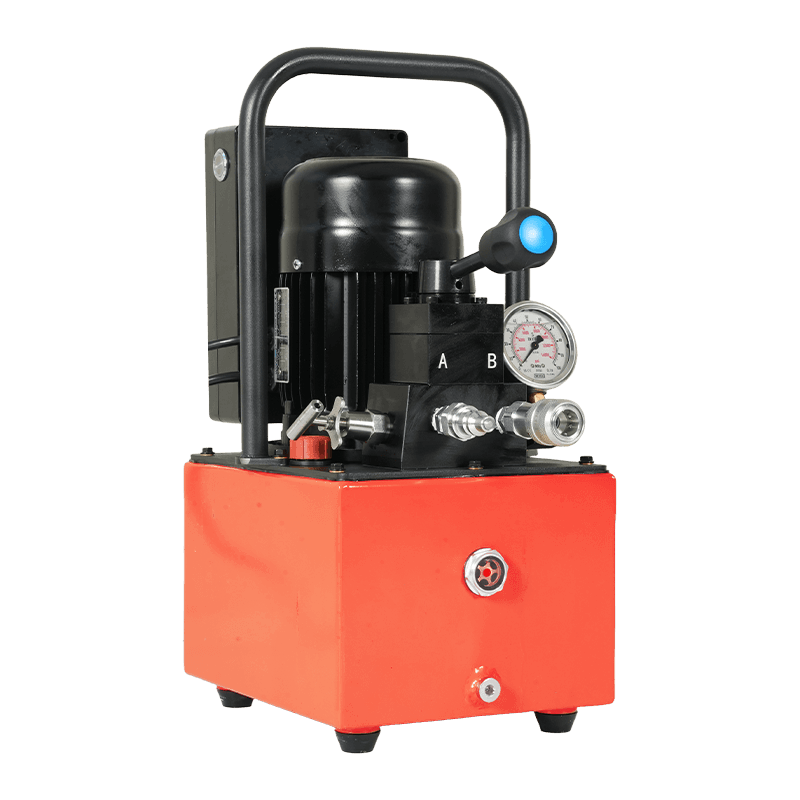
EP3 Dual-Circuit Dual-Speed Electric Hydraulic Pump
Power Tool Special Hydraulic Pump
-
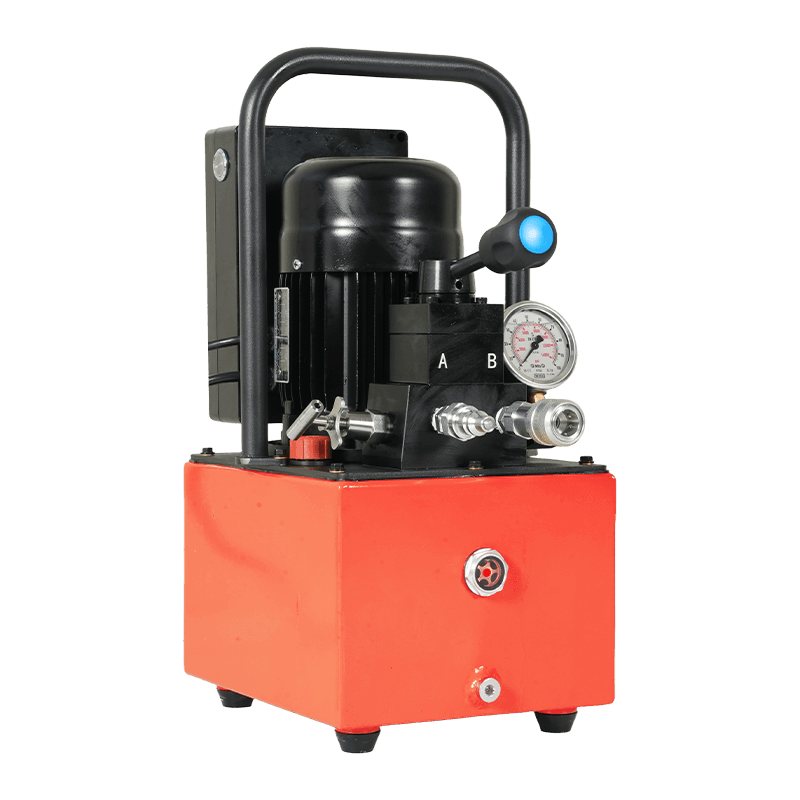
EP6 Enhanced-Flow Dual-Speed Electric Hydraulic Pump
Power Tool Special Hydraulic Pump
-
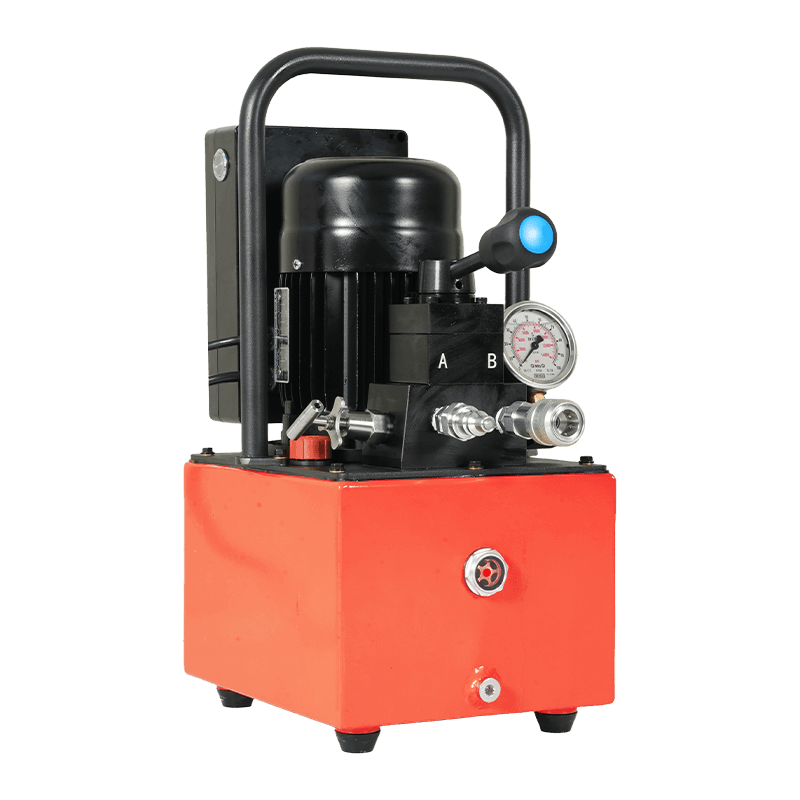
EP12 Three-Stage High-Power Electric Hydraulic Pump
Power Tool Special Hydraulic Pump
Power tool hydraulic pumps are purpose-built power sources for electric cable crimping tools, cutters, punches, busbar benders, and aerial hydraulic equipment used in power grid construction and maintenance. Featuring dual-circuit designs, high-low pressure automatic switching, and flexible valve configurations, they support both single-acting and double-acting tool operation. Suitable for power substations, photovoltaic and wind power plants, railway electrification, industrial switchgear installations, and cable engineering projects.
ABOUT Ruide
Hangzhou Ruide Machinery Co., Ltd.
Hangzhou Ruide Machinery Co., Ltd. is an enterprise with professional strength in the field of ultra-high pressure hydraulic tool machinery. Power Tool Special Hydraulic Pump Manufacturers in China. The company is committed to providing customers with high-quality and innovative hydraulic machinery solutions. With years of industry experience and professional knowledge, we have demonstrated outstanding capabilities in hydraulic design, manufacturing, and maintenance. The various hydraulic pumps, hydraulic wrenches, hydraulic tensioners, hydraulic jacks and other tools produced by the company are widely used in different fields such as wind power, petroleum, chemical industry, construction, nuclear power, etc. From standard hydraulic tools to large non-standard equipment, our products are praised by customers for their reliability and high performance. The company has a highly qualified and experienced team, including engineers, technicians, and managers. In addition, the company also provides high-quality after-sales service to ensure continuous customer satisfaction. The company focuses on technological innovation and continuously invests resources in research and development to meet the ever-changing market demands. Custom Power Tool Special Hydraulic Pump. Always adhere to strict quality control standards to ensure that every product meets or exceeds customer expectations.
-
2022
Founded in
-
2000+
Factory area
-
30+
Number of Employees
-
1000+
Projects
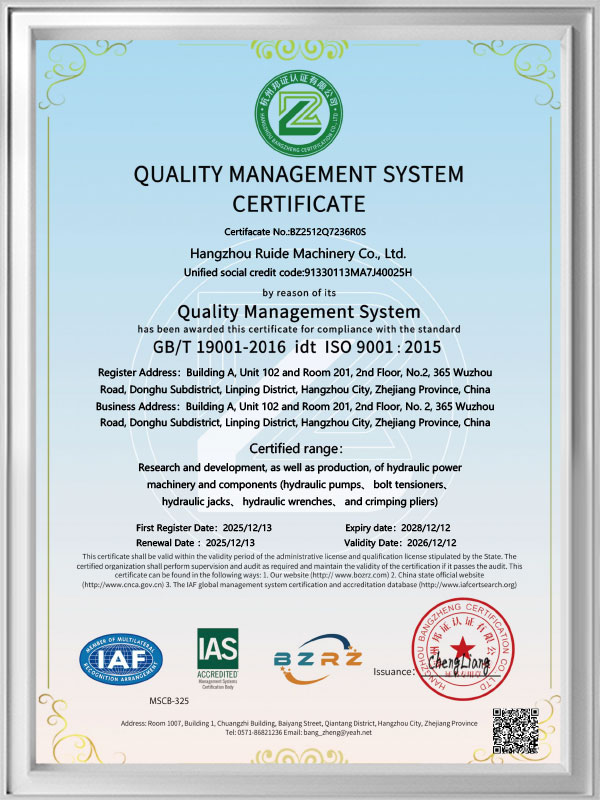
Certificate Of Honor
News
-
A torque wrench pump that rattles like it is full of gravel, a gauge needle that jumps instead of holding steady, or a tensioner that creeps after the pressure is set—these are familiar signs of air in hydraulic fluid. The fluid itself is often not the source. In most recurrent cases, free air is e...
READ MORE -
A pressure dew point that creeps up two or three degrees over eighteen months is rarely a refrigeration fault. In most industrial compressed air dryers, the cabinet, the refrigerant compressor and the controller outlive everything around them. What actually sets the dew point is the condition of th...
READ MORE -
The Core Purpose of a Hydraulic Torque Wrench A hydraulic torque wrench is primarily used for tightening or loosening large, high-strength bolts with extreme precision and force. Unlike manual tools, it utilizes hydraulic pressure to generate torque outputs ranging from 1,000 to over 50,000 foot-po...
READ MORE
Industry Knowledge
Hangzhou Ruide Machinery Co., Ltd. manufactures Power Tool Special Hydraulic Pump units as dedicated power sources for electric cable crimping tools, cutters, punches, busbar benders and aerial hydraulic equipment. Each pump is built around the tool it drives: dual-circuit layouts, automatic high–low pressure switching and valve configurations matched to single-acting or double-acting cylinders. The range serves power grid construction and maintenance, substations, photovoltaic and wind plants, railway electrification, switchgear installation and cable engineering projects.
A Power Source Sized to the Tool, Not to a Catalogue Rating
A crimping head, cutting head or busbar bender has a defined oil demand, a working pressure and a return behaviour. We configure the pump to that working point so the tool reaches its rated output inside the cycle time the job allows, rather than running a generic pressure rating against a mismatched flow.
- Dual-circuit design — separate high- and low-pressure circuits deliver fast approach and a controlled working stroke.
- Automatic high–low pressure switching — the high-flow stage advances the tool, then the high-pressure stage completes the crimp, cut or punch.
- Valve configuration — manual, solenoid or pedal release arrangements matched to the tool's return type.
- Single- and double-acting operation — the port and valve set is built for the cylinder type actually used on site.
- Reservoir sizing — oil volume is matched to the number of tool cycles between refills and to the duty cycle of the shift.
Our Power Tool Special Hydraulic Pump Range
Three electric pump platforms cover most power tool duty in the field. All three are built in our Hangzhou factory and share the same approach to circuit design, sealing and valve configuration.
| Model | Circuit and Stage Design | Typical Tool Pairing | Configuration Focus |
|---|---|---|---|
| EP3 Dual-Circuit Dual-Speed Electric Hydraulic Pump | Two circuits, two-speed | Crimping heads, cutters, small punches | Compact body, fast approach, single- or double-acting tool setup |
| EP6 Enhanced-Flow Dual-Speed Electric Hydraulic Pump | Two circuits, two-speed, increased flow | Larger crimping heads, busbar benders, punches | Higher flow for longer hose runs and larger cylinder volumes |
| EP12 Three-Stage High-Power Electric Hydraulic Pump | Three-stage, high power | Heavy crimping, cutting and aerial hydraulic equipment | High-pressure stage for demanding cycles and sustained duty |
Selection between the three platforms follows the tool's oil volume per full stroke, the working pressure it needs, the cycle time the crew expects and the hose length between pump and tool. A long hose run on a large crimping head, for example, calls for the higher flow of the EP6 or the three-stage output of the EP12 rather than the compact EP3.
Where These Pumps Are Used
- Substations and switchgear installation — crimping, punching and busbar bending at the point of assembly.
- Overhead and underground cable engineering — cutters, crimping heads and compression tools on cable termination work.
- Photovoltaic and wind power plants — cable and connection work during construction and maintenance campaigns.
- Railway electrification — catenary and contact line work supported by aerial hydraulic equipment.
- Industrial maintenance workshops — repetitive crimping, cutting and punching stations with a fixed power supply.
- Utility vehicle mounted equipment — pump packages matched to the electrical supply available on the vehicle.
Matching Pump, Tool and Working Point
The pump and the tool are one hydraulic circuit, so the two are specified together. These are the variables that decide the circuit layout, the stage sizing and the connection set.
- Tool type and its rated working pressure
- Single-acting or double-acting cylinder behaviour
- Oil volume required per full tool stroke
- Target cycle time for the crimp, cut or punch
- Hose length and internal diameter between pump and tool
- Valve function: hold, manual release or automatic return
- Site power supply: voltage, phase and frequency
- Duty cycle and ambient temperature range
- Coupler standard already used by the tool fleet
Configuration Options and Control Integration
Configuration starts with the power available where the pump will run and the way the operator needs to control it. Motor rating, control device, pressure setting and connection set are confirmed before the unit is built, and the same platform can be delivered in bench, trolley or vehicle-mounted form.
- Drive and supply — electric motor matched to the site supply, with cable and plug arrangement to suit.
- Operator control — hand pendant, foot pedal or remote start and stop.
- Pressure control — adjustable relief setting with a readable gauge for the working pressure.
- Connections — quick couplers and hose assemblies matched to the tools already in service.
- Signal interface — where a project requires it, a pressure or status signal is provided for a higher-level controller.
- Auxiliary equipment — hose reels, protective sleeving and connection sets from our Accessories & Tools range.
Materials, Sealing and Quality Control
Ultra-high pressure hydraulics depend on sealing integrity and clean machining. Pump bodies, valve blocks and cylinder interfaces are machined and assembled in-house, and full-process quality management applies: inspection follows each process step, and every finished pump passes a 100% final inspection against the customer's requirements and the applicable standard before packing.
- Pressure and hold tests on the assembled pump
- Leak inspection at working pressure
- Function test with the matched tool where the tool is supplied with the pump
- Oil cleanliness, coupler and hose inspection before shipment
Installation, Commissioning and Acceptance
Commissioning is short when the circuit is specified correctly, but the sequence matters on ultra-high pressure equipment.
- Fill with the specified hydraulic oil grade and check filtration before first start.
- Bleed air from the circuit and cycle the tool without load to confirm smooth advance and return.
- Verify the relief setting against the tool's rated working pressure.
- Run a full working cycle on the actual tool and check hold pressure and leak behaviour.
- Confirm coupler engagement, hose routing and abrasion protection on site.
- Hand over with the operating and maintenance documentation for the delivered configuration.
Maintenance, Spare Parts and Serviceability
The pumps are laid out so routine service can be carried out on site: accessible oil fill and drain points, replaceable couplers and hoses, and valve components that can be serviced without dismantling the whole unit. Our after-sales team supports the delivered equipment through its working life.
- Oil and filter service according to duty cycle and site conditions
- Seal kits, couplers, hoses and gauges as replaceable items
- Relief valve and control spares for continued operation
- Spare parts identified against the delivered pump configuration
Information We Use to Configure Your Solution
A configuration and quotation are prepared from the working point, not from a model name alone. The table below shows what each input determines.
| Project Input | What It Determines |
|---|---|
| Tool model and acting type | Valve arrangement, port type and return behaviour |
| Working pressure and oil volume per cycle | Stage sizing and reservoir capacity |
| Cycle time target | Flow rate and circuit design |
| Site power supply | Motor voltage, phase, frequency, cable and plug |
| Hose length and coupler standard | Pressure drop allowance and connection set |
| Duty cycle and ambient conditions | Cooling, oil volume and duty rating |
| Control interface | Pendant, foot switch, remote control or signal output |
| Quantity, documentation and delivery port | Packing, manuals and shipping arrangement |
Customized production is core business for us. Where a standard platform does not fit, we develop and manufacture from the drawings or samples provided, and the same engineering team follows the unit from hydraulic design through manufacturing and maintenance support. Our wider Hydraulic Pump range covers bolt tensioning, wrench, jack and manual platforms for projects that combine several hydraulic tasks.
Frequently Asked Questions
Which tools can a Ruide power tool hydraulic pump drive?
Our power tool pumps are built for electric cable crimping tools, cutters, punches, busbar benders and aerial hydraulic equipment. They are used in power grid construction and maintenance, substations, photovoltaic and wind plants, railway electrification, switchgear installation and cable engineering projects.
Can one pump run both single-acting and double-acting tools?
Yes, but the valve and port arrangement differs between the two. We set the pump up for the cylinder type used on site, so the acting type is confirmed at the configuration stage rather than adjusted afterwards.
How do we choose between the EP3, EP6 and EP12?
The decision follows oil volume per tool stroke, required working pressure, target cycle time, hose length and duty cycle. The EP3 suits compact crimping and cutting work, the EP6 adds flow for larger heads and longer hoses, and the EP12 three-stage platform handles heavy crimping, cutting and aerial equipment with sustained duty.
Do you build custom pump configurations?
Customized production is our core business. We develop and manufacture from the drawings or samples you provide, covering hydraulic design, manufacturing and maintenance, from standard units to large non-standard equipment.
What testing is carried out before a pump is shipped?
Full-process quality management applies, with inspection after each process step and a 100% final inspection against customer requirements and the applicable standard. Assembled pumps are pressure and hold tested, checked for leaks at working pressure, and function tested with the matched tool where the tool is supplied with the pump.
What information should accompany a request for a configuration and quotation?
Send the tool model and acting type, working pressure, oil volume per cycle, cycle time target, site power supply, hose length, coupler standard, duty cycle, control interface and required quantity. With those details we can confirm the platform, the valve arrangement and the connection set, and prepare the quotation against the actual working point.
Quick Contact
No. 365 Wuzhou Road, Donghu Street, Linping District, Hangzhou City, Zhejiang Province
Products
Stay In Touch
If you have any questions or need help, feel free to contact with our team.
Copyright © Hangzhou Ruide Machinery Co., Ltd. Rights Reserved.
 Power Tool Special Hydraulic Pump Factory in China