English
 English
 عربى
Industry News

Content
Hydraulic torque wrenches are the industry standard for applying precise, high-magnitude torque to large bolts and nuts where manual effort is insufficient or unsafe. By converting hydraulic pressure into rotational force, these tools deliver consistent accuracy within ±3%, eliminating the variability and physical strain associated with manual cheater bars or impact wrenches. For critical infrastructure such as wind turbines, pressure vessels, and heavy machinery, they ensure joint integrity and prevent catastrophic failures caused by under- or over-tightening.
Unlike pneumatic or electric alternatives, hydraulic systems offer superior power-to-weight ratios and intrinsic safety in hazardous environments. They allow operators to tighten bolts ranging from M20 to M150+ with controlled speed and exact torque values, making them indispensable for maintenance teams and construction crews dealing with high-strength fasteners.
Selecting the correct tool depends on spatial constraints and bolt accessibility. The two primary designs serve distinct operational needs:
| Type | Design Feature | Best Application | Torque Range |
|---|---|---|---|
| Square Drive | Uses standard sockets | General industrial use, accessible bolts | Up to 100,000 Nm |
| Low Profile (Cassette) | Direct nut engagement, compact | Tight spaces, flanged connections | Up to 50,000 Nm |
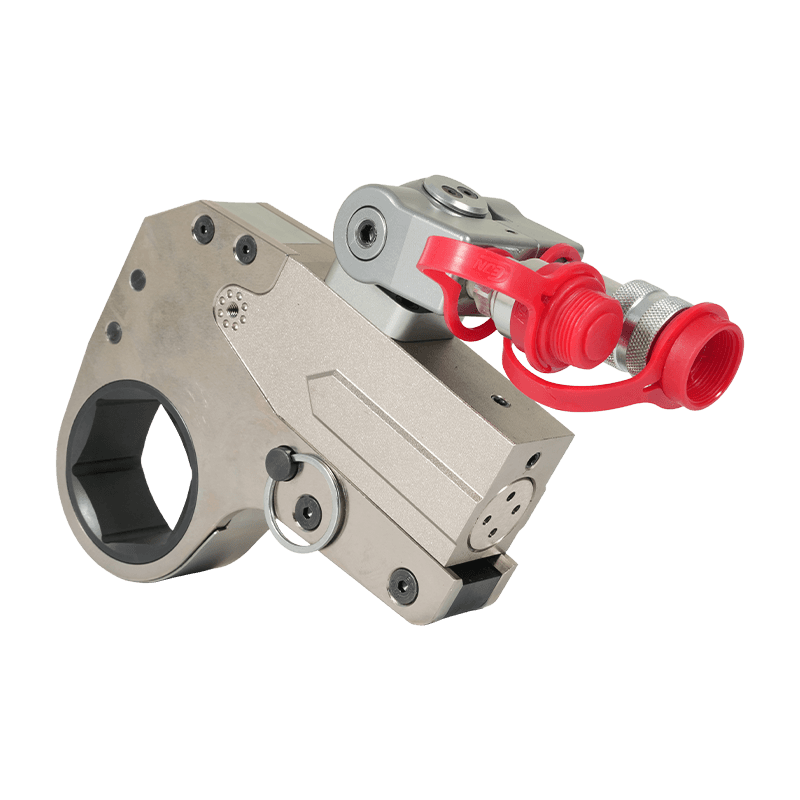
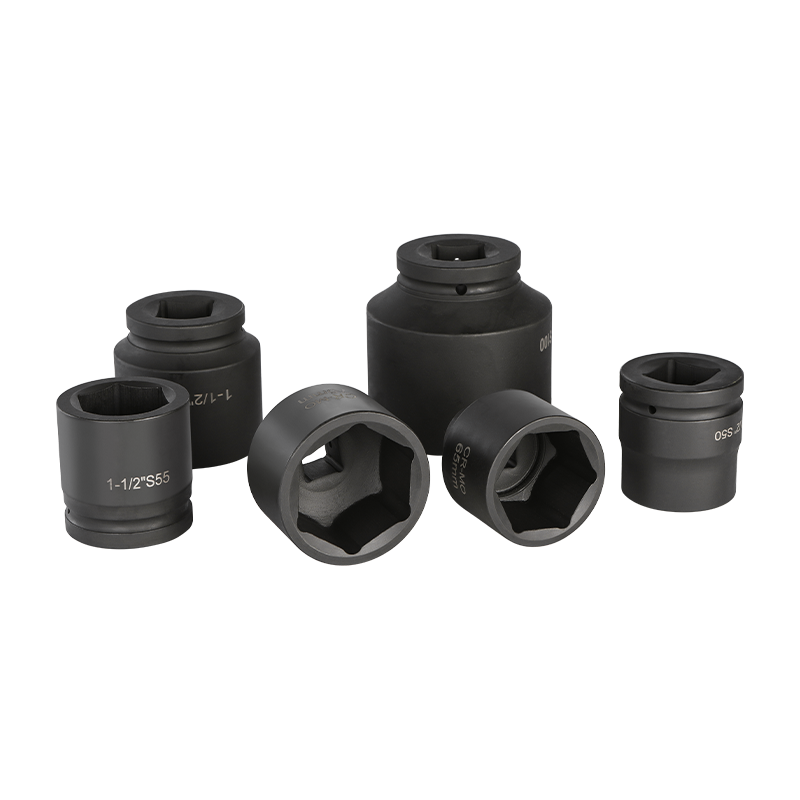
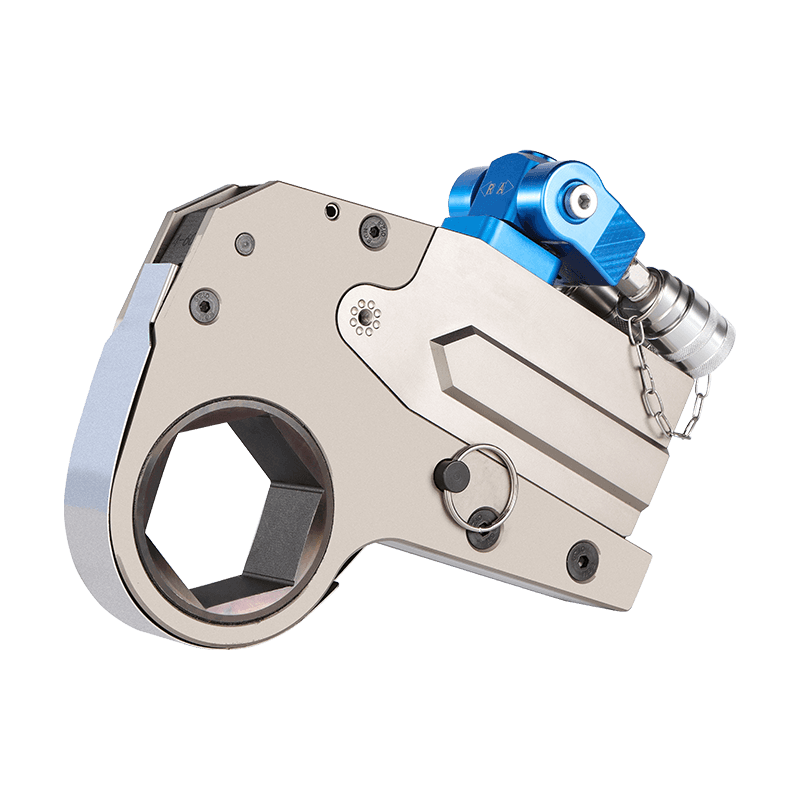
Square drive wrenches offer versatility by accepting various socket sizes, making them ideal for diverse job sites. However, they require more radial clearance. Low profile wrenches, also known as cassette wrenches, fit directly onto the nut and bolt assembly, requiring as little as 15 mm of clearance. This makes them essential for heat exchangers, pipe flanges, and confined machinery housings where swing space is limited.
Transitioning to hydraulic torque wrenches delivers significant operational improvements:
To maximize the lifespan of hydraulic torque wrenches and ensure joint reliability, follow these procedural guidelines:
Inspect hoses for cracks or bulges, verify coupler connections are secure, and ensure the hydraulic pump reservoir is filled with the correct ISO-grade fluid. Check that the reaction arm or back-up link is properly positioned against a solid surface to counteract rotational force.
For square drive wrenches, ensure the socket is fully seated on the nut. For low profile tools, verify the cassette is centered on the nut flats. Misalignment can cause slippage, damaging both the tool and the fastener. Always use a backup wrench on the opposing nut if working on double-nutted assemblies.
Never attempt to reach full torque in a single pass. Use a multi-step approach to seat gaskets evenly and prevent bolt bending:
Regular maintenance ensures the continued accuracy and safety of hydraulic torque wrenches. Neglecting care can lead to pressure leaks, inaccurate readings, and potential tool failure under load.
By adhering to these maintenance protocols, industrial teams extend the service life of their equipment and maintain the precision required for critical bolting applications. Investing in proper care reduces downtime and ensures that every bolt tightened meets engineering specifications.
The variety of models, to meet the development needs of various regions in the world.
Quick Contact
Products
Stay In Touch
If you have any questions or need help, feel free to contact with our team.
 Custom Hydraulic Tools and Machinery Manufacturers