English
 English
 عربى
Industry News

Content
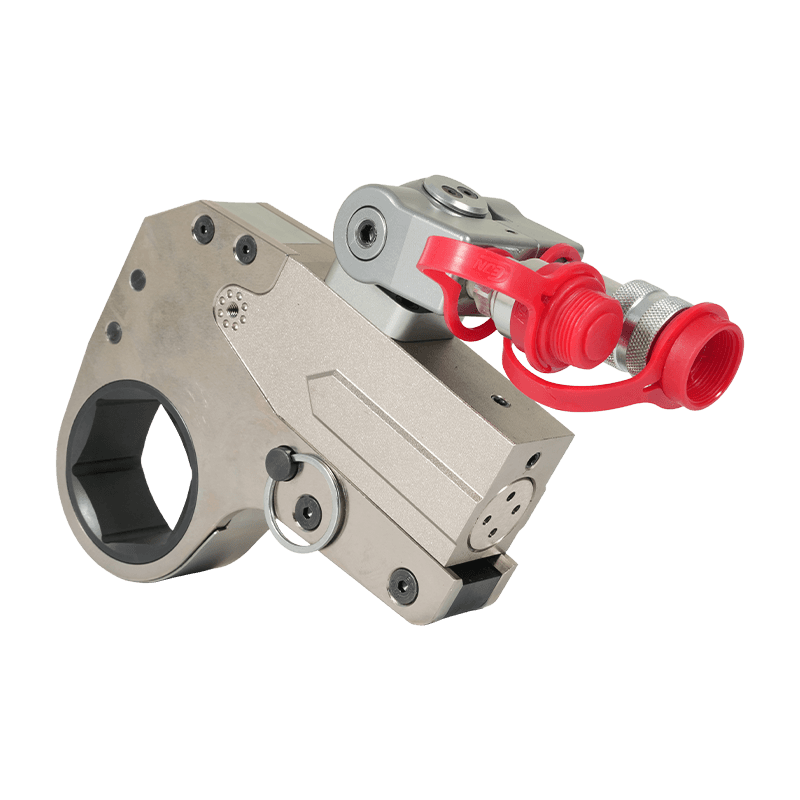
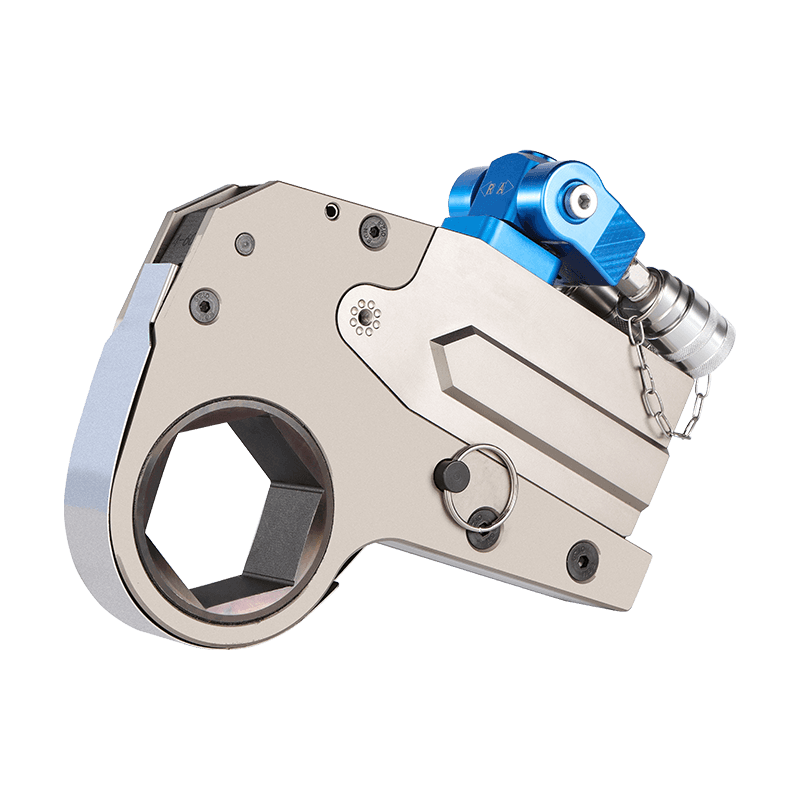
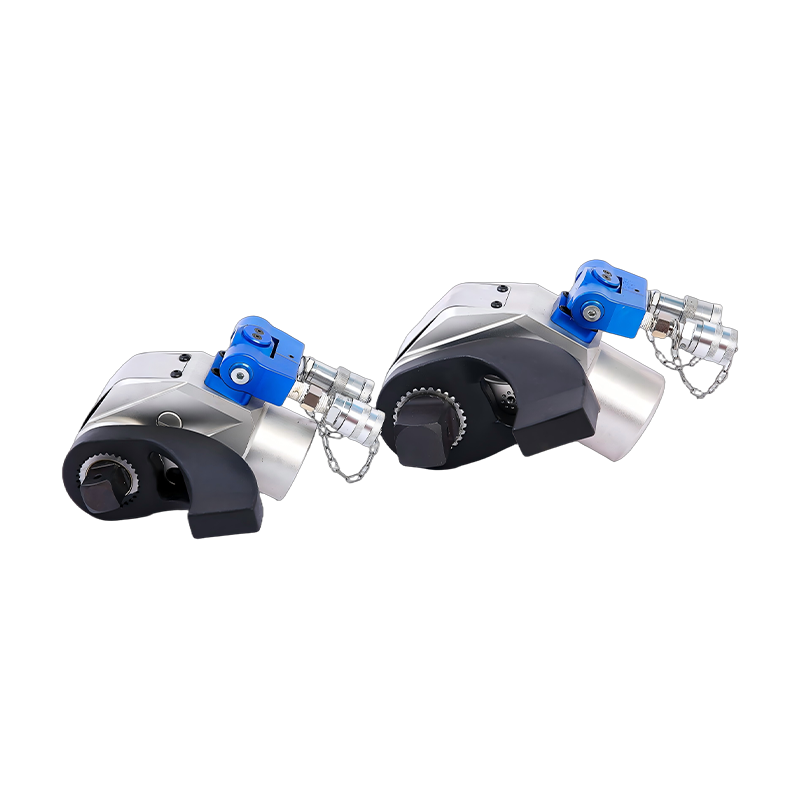
For most bolting jobs, the right hydraulic torque wrench is the one whose capacity puts your target torque in the upper part of its range, whose profile fits the available clearance, and whose pump delivers enough flow to keep the cycle time reasonable. A low-profile hex cassette wrench suits tight flange work, while a square drive wrench suits open access and high torque.
Hydraulic tools cover an enormous span, from a few hundred newton metres on small flanges to well over 100,000 Nm on wind turbine and heavy structural joints. Picking by bolt size alone is not enough, because the real constraints are the torque you need, the room around the nut and the quality of the bolting procedure behind it.
A pump pushes oil into a cylinder, the piston extends, and the force acts at a fixed distance from the centre of the nut. Torque is simply that force multiplied by the lever arm, and force is hydraulic pressure multiplied by piston area. That is why the torque you read off the chart tracks the pressure on the pump gauge.
As a simple illustration, a piston area of 10 cm² at 700 bar produces about 70 kN of force. With a lever arm of 0.08 m, that gives roughly 5,600 Nm before mechanical losses. Real tools lose some output to friction, so each wrench ships with a calibration chart that links pump pressure to actual torque. Always use that chart rather than your own calculation.
These are the two main designs you will meet on site. Each solves a different access problem.
| Feature | Square Drive | Low-Profile Hex Cassette |
|---|---|---|
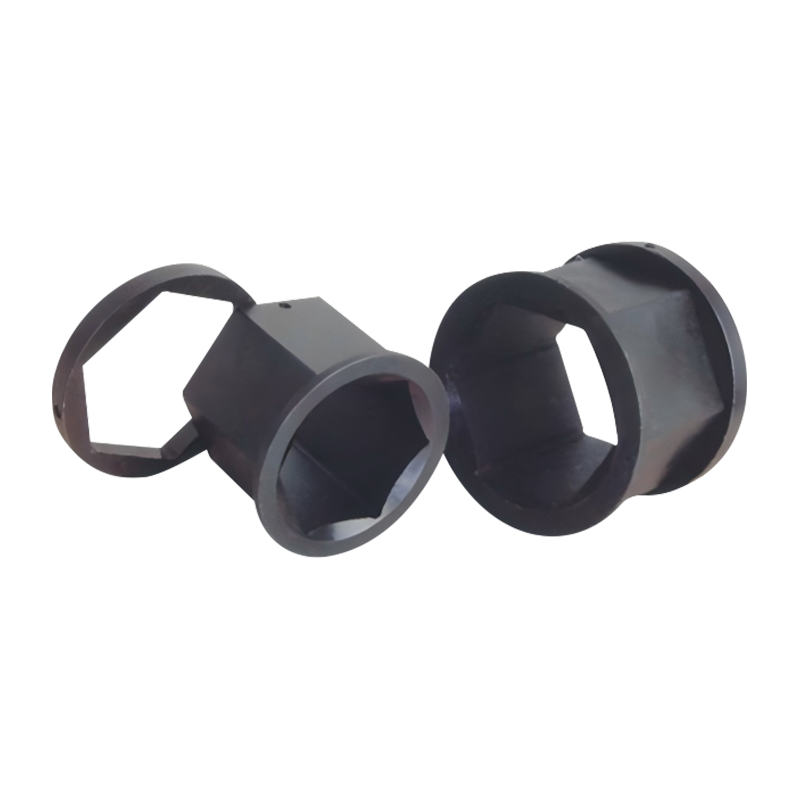
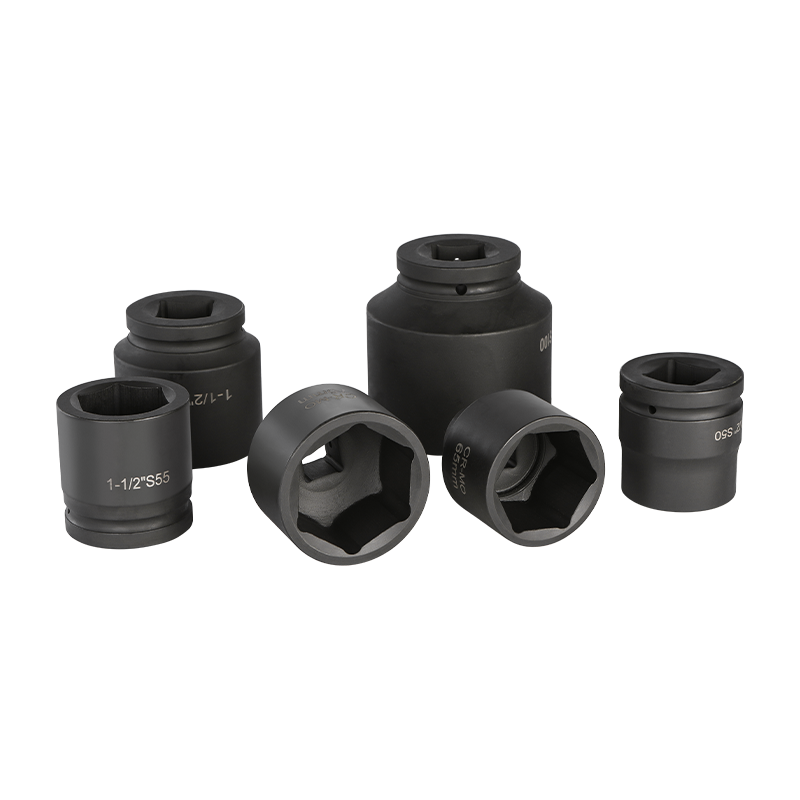
| Socket type | Standard impact sockets on a square drive | Interchangeable hex cassettes |
| Clearance needed | More radial and vertical space | Very compact, ideal for tight flanges |
| Torque range | Wide, up to very high torque | Mostly low to high |
| Speed of use | Fast ratcheting with easy socket changes | Fast, but cassettes must match nut size |
| Best use | Open structures, large nuts, general maintenance | Pipe flanges, pressure vessels, restricted areas |
Hydraulic wrenches are most repeatable in the upper part of their range, so avoid using one near the bottom of its capacity. A common guideline is to select a tool where your final torque falls at roughly 50 to 90 percent of its maximum, and to confirm the manufacturer’s recommended working window.
Remember that the reaction arm must have a firm, square surface to push against, such as a neighbouring nut or a flange edge. If there is nothing solid within reach, the wrench is the wrong choice for that joint.
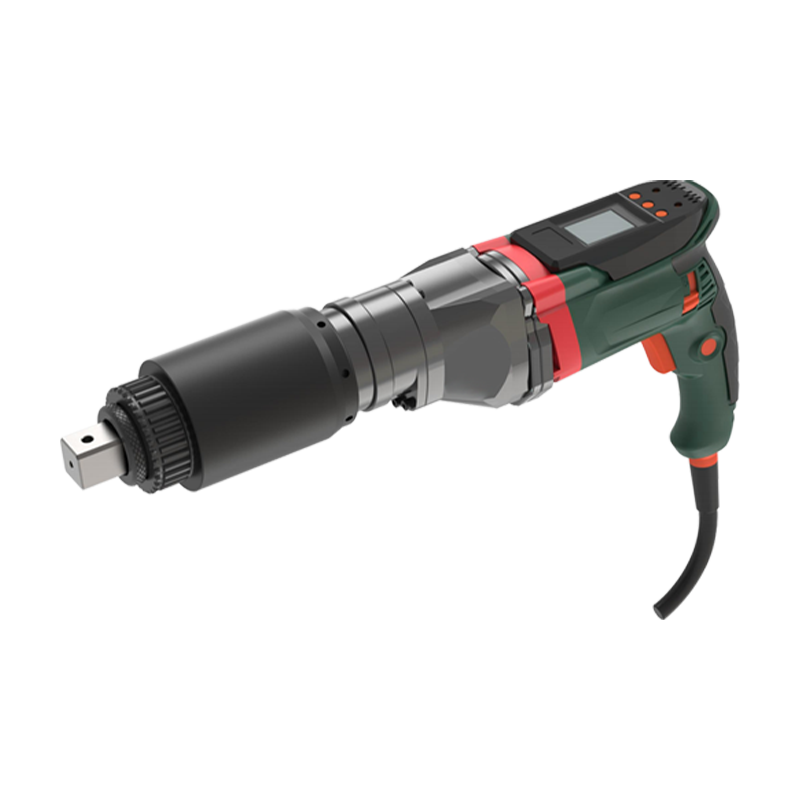
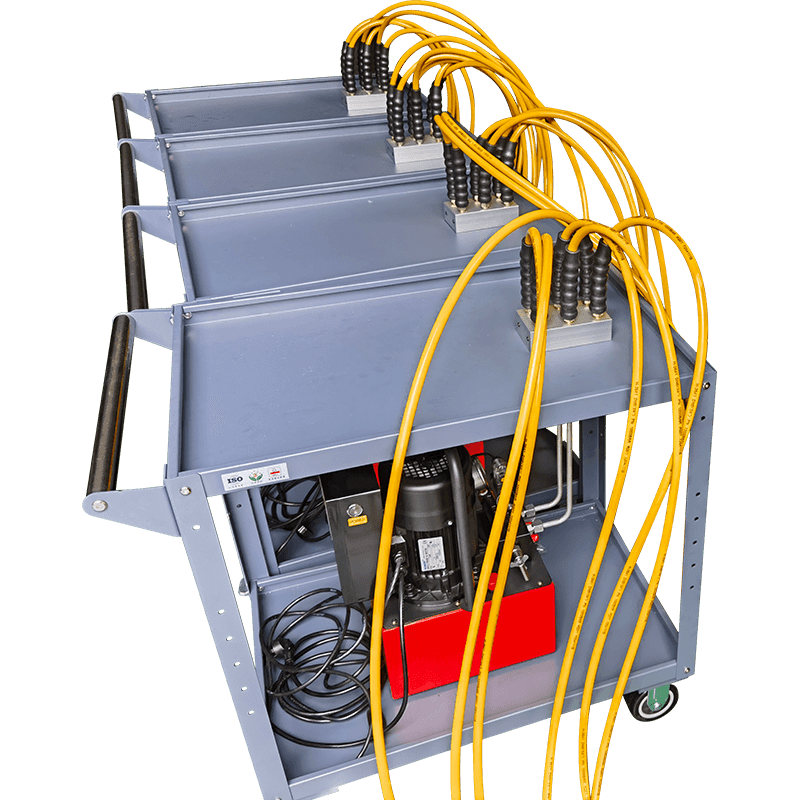
Most industrial hydraulic torque wrenches operate at up to 700 bar (about 10,000 psi), and the pump, hoses and couplings must all be rated for that pressure. The pump type then depends on how often and how fast you work.
Keep hose lengths sensible, because very long runs slow the pressure response. Check that couplings are fully seated before pressurising, as a half-engaged coupling is a frequent cause of erratic readings and leaks.
Accuracy depends as much on the sequence as on the tool. A widely used approach for flanges is a staged pass pattern in a cross or star sequence.
The final circular pass matters because tightening one bolt relaxes its neighbours. Skipping it is a leading reason flanges weep after startup.
Well-maintained hydraulic wrenches are typically specified to about plus or minus 3 percent of the applied torque. That is only the tool’s contribution, though. Torque is a proxy for bolt tension, and friction under the nut and in the threads absorbs most of the effort, so tension can still vary noticeably between bolts.
This is why lubricant type, thread condition and washer use should be controlled, and why critical joints sometimes use tension-based methods instead. To keep readings trustworthy, calibrate the wrench and gauge together as a matched set, commonly at least once a year or after any impact, repair or suspected overload.
Treated this way, a quality hydraulic torque wrench can stay accurate and reliable for many years of heavy industrial bolting.
The variety of models, to meet the development needs of various regions in the world.
Quick Contact
Products
Stay In Touch
If you have any questions or need help, feel free to contact with our team.
 Custom Hydraulic Tools and Machinery Manufacturers